
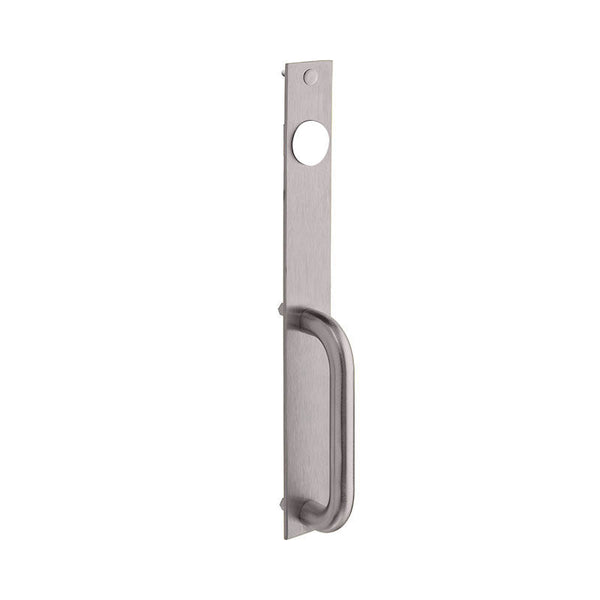
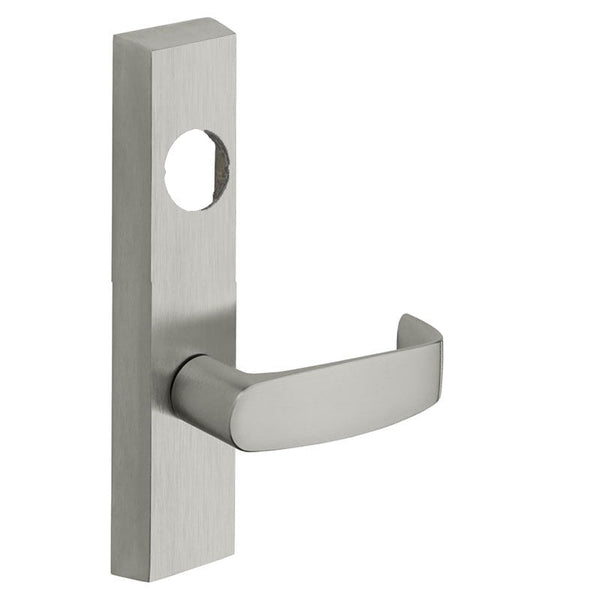
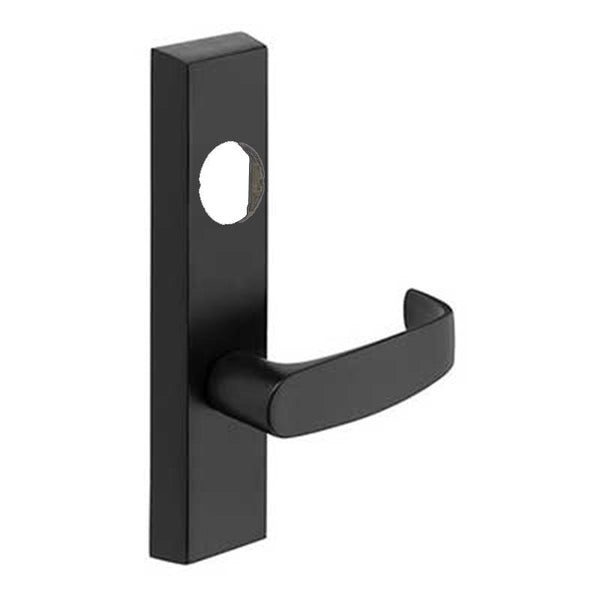
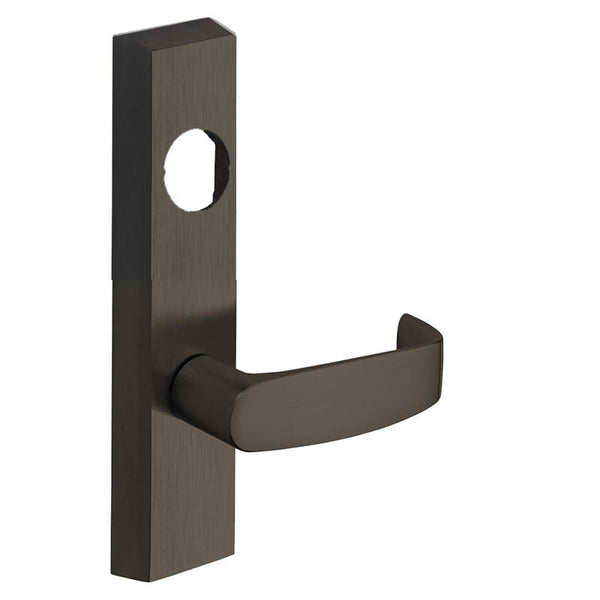
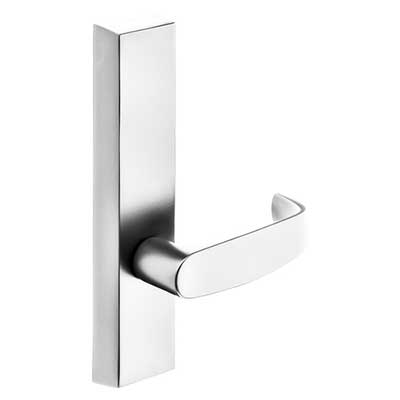
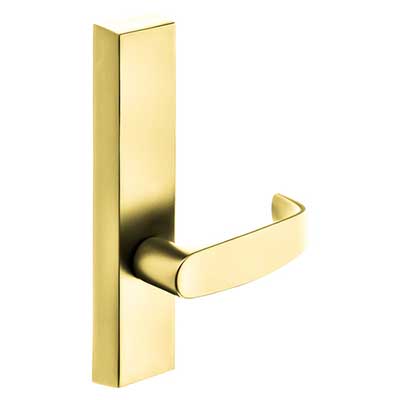
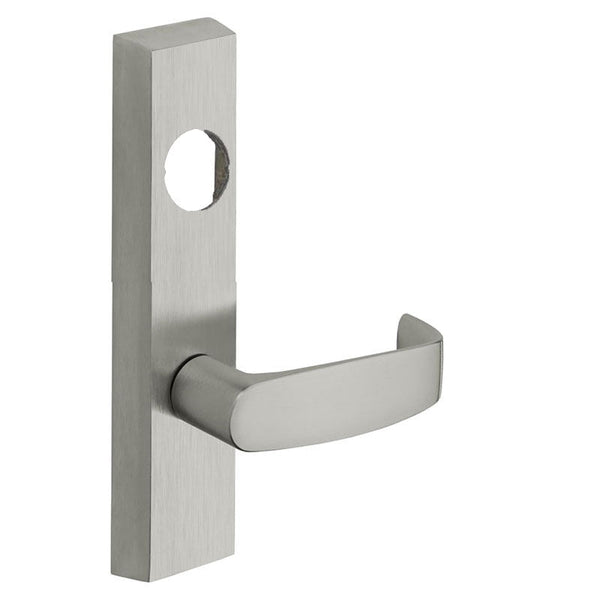
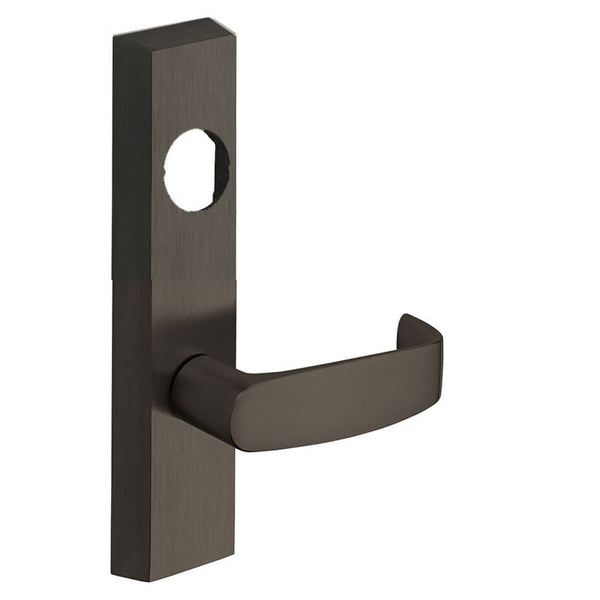
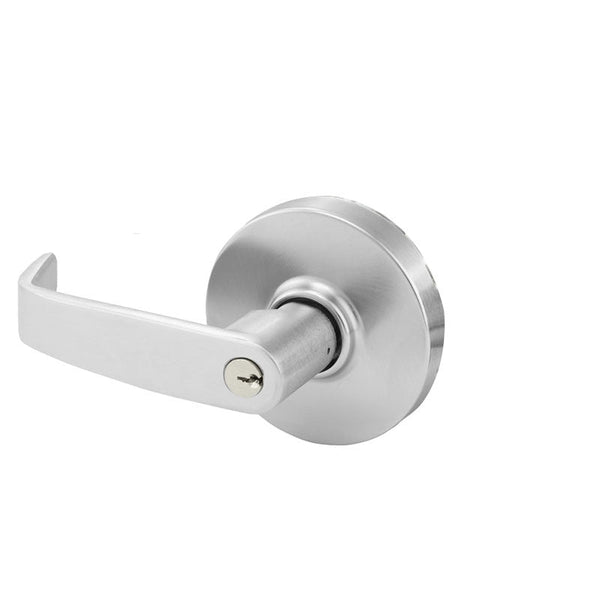
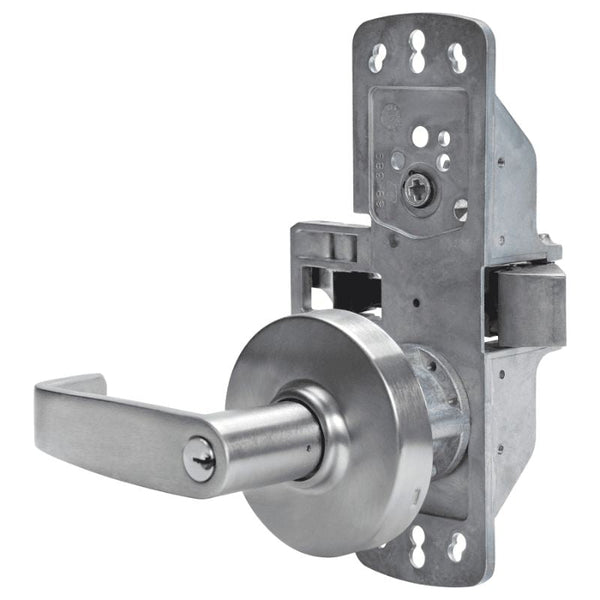
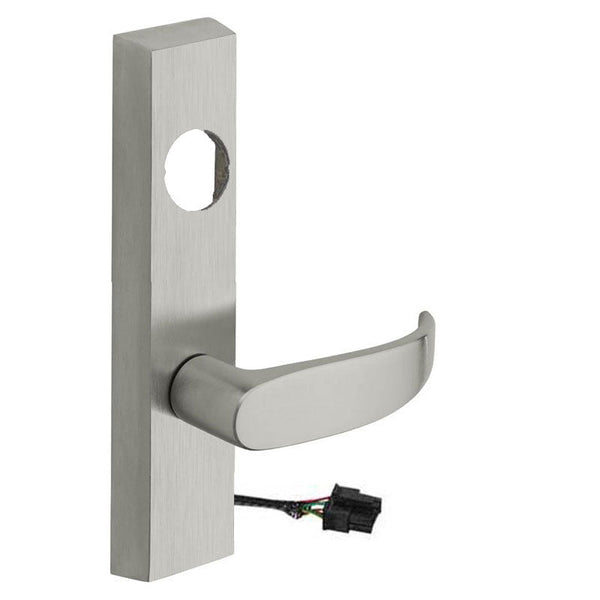
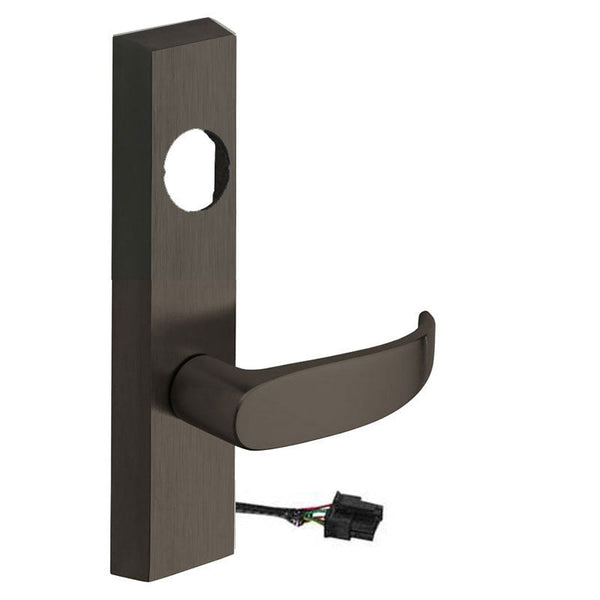
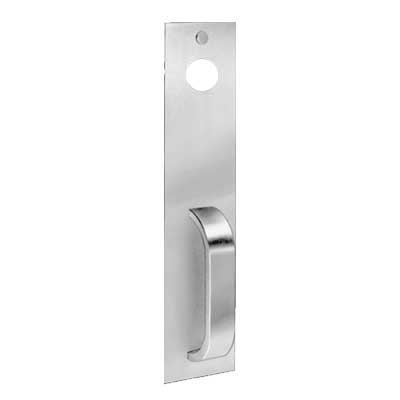
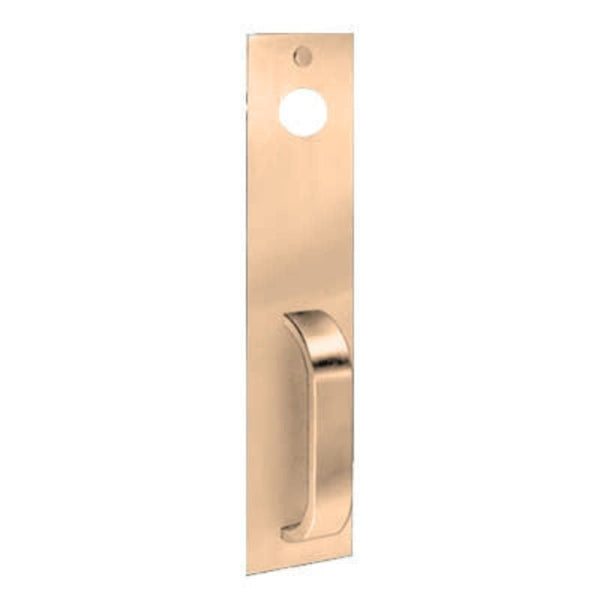
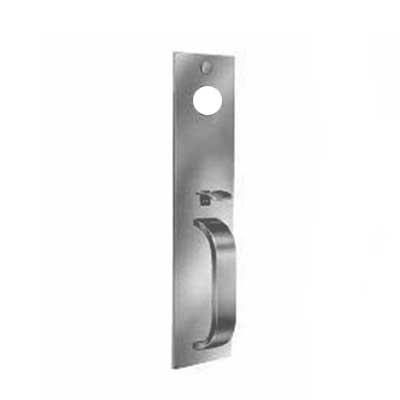
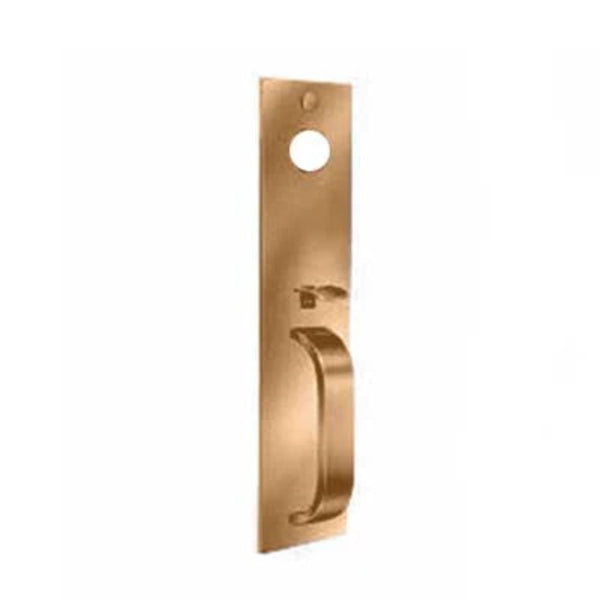
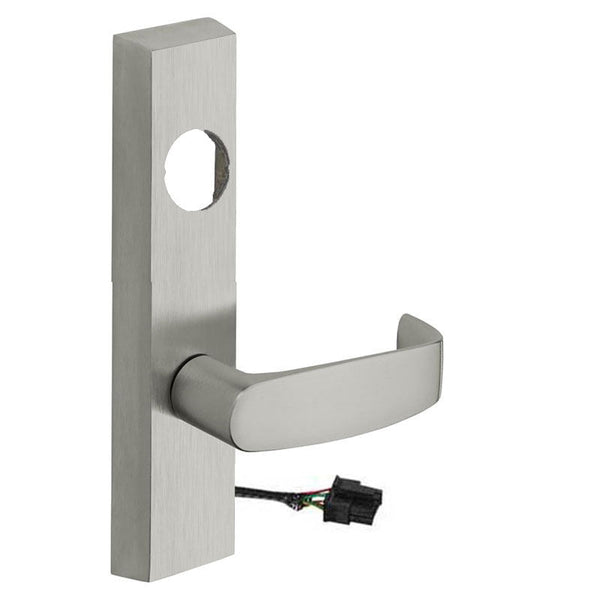
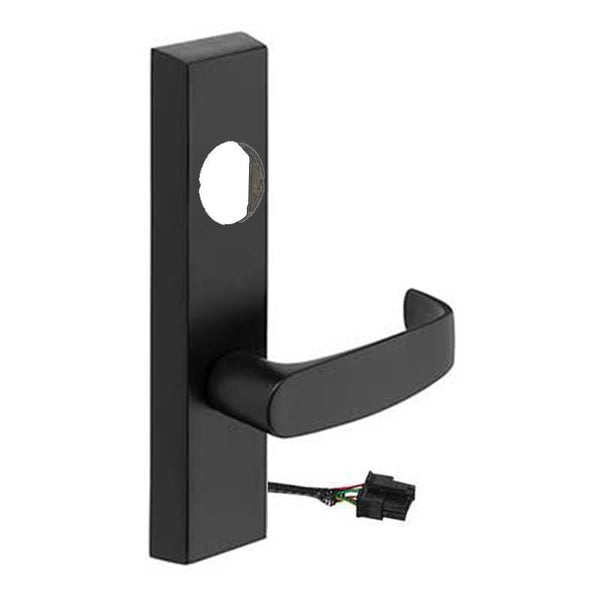
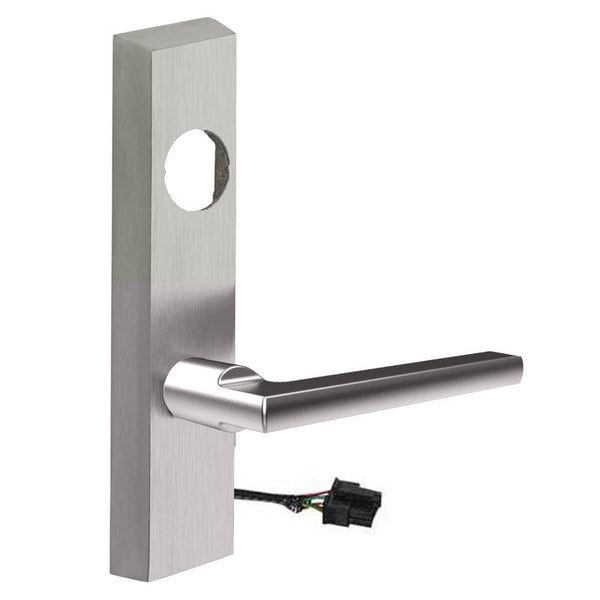
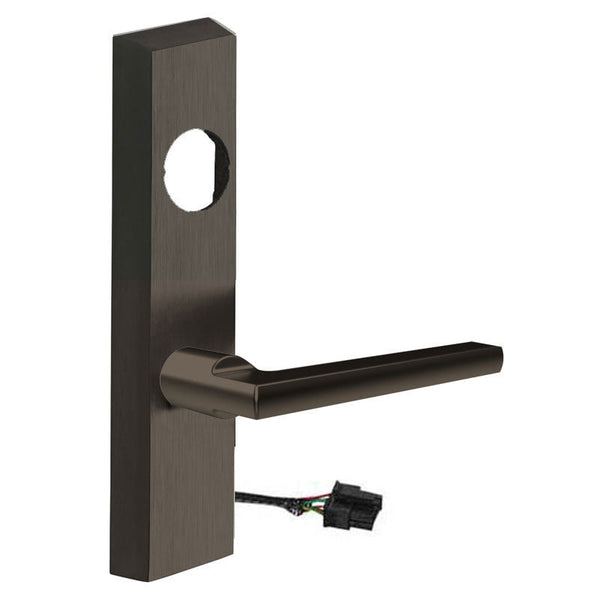
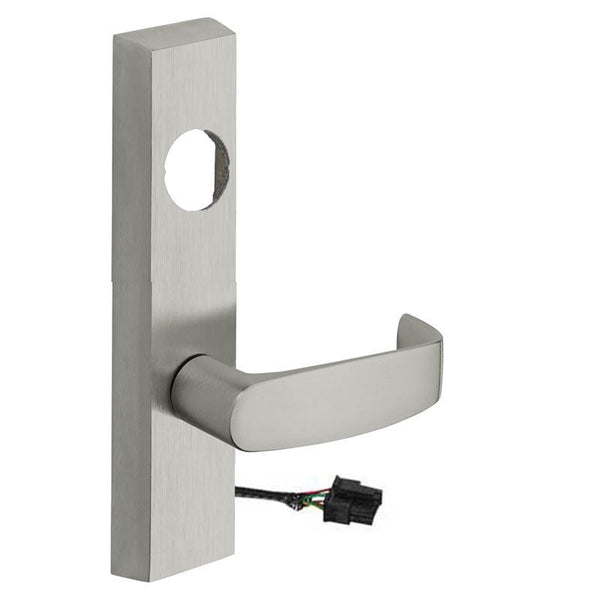
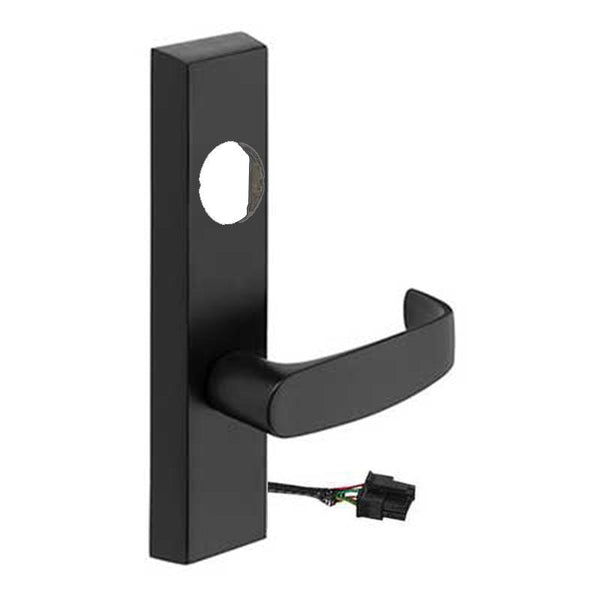
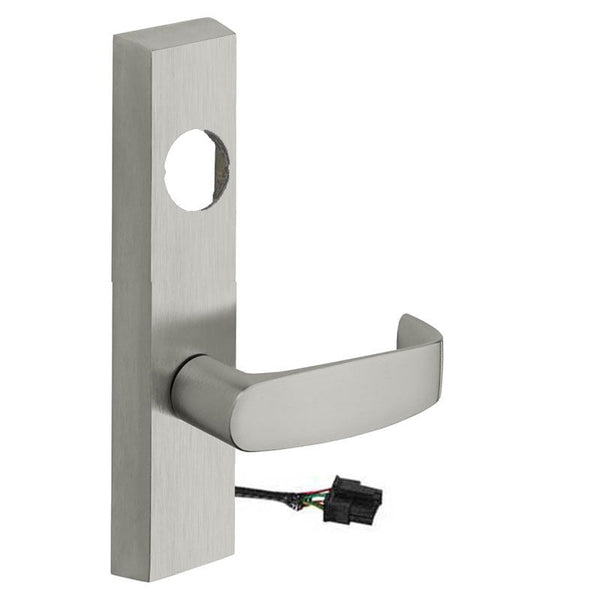
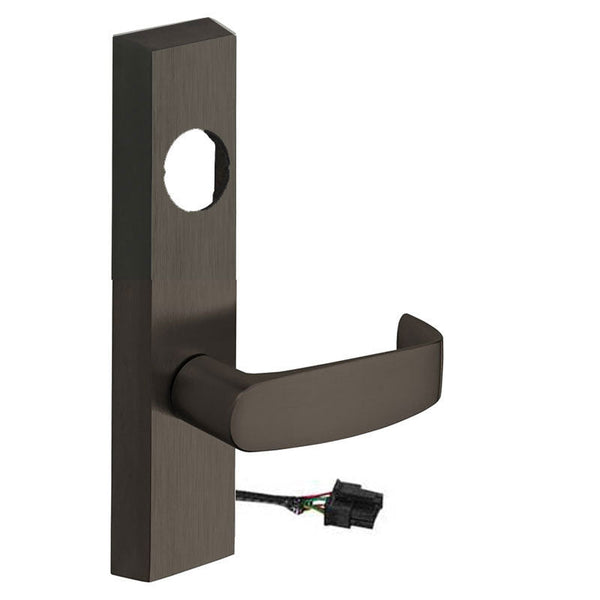
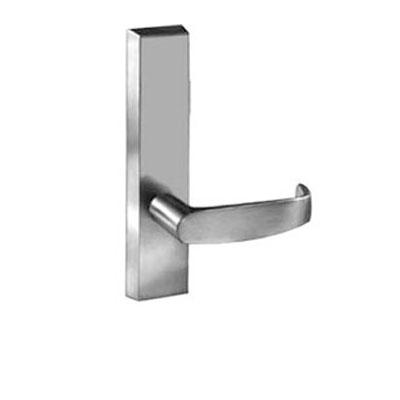
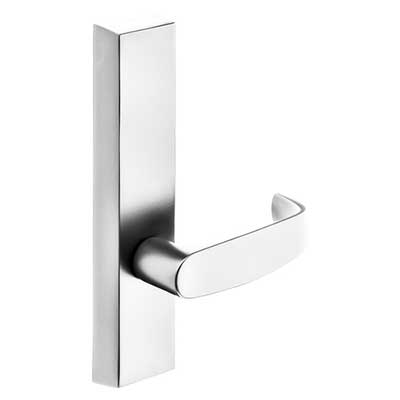
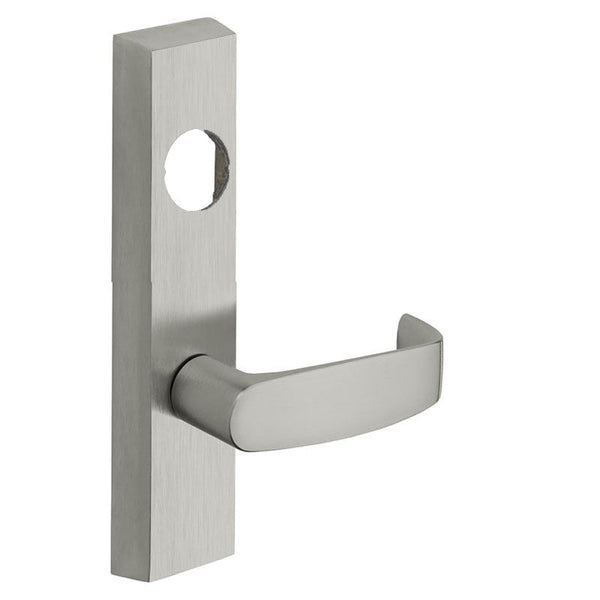
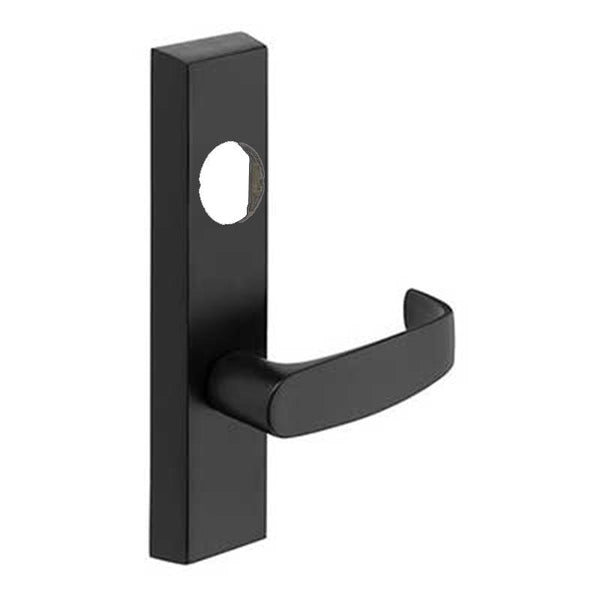
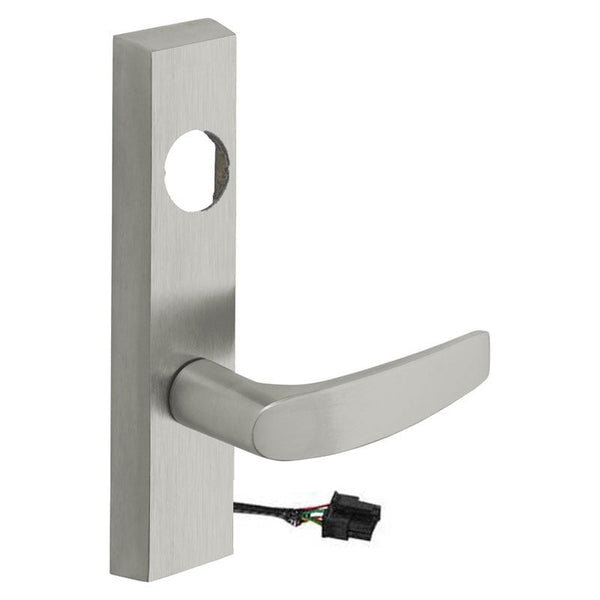
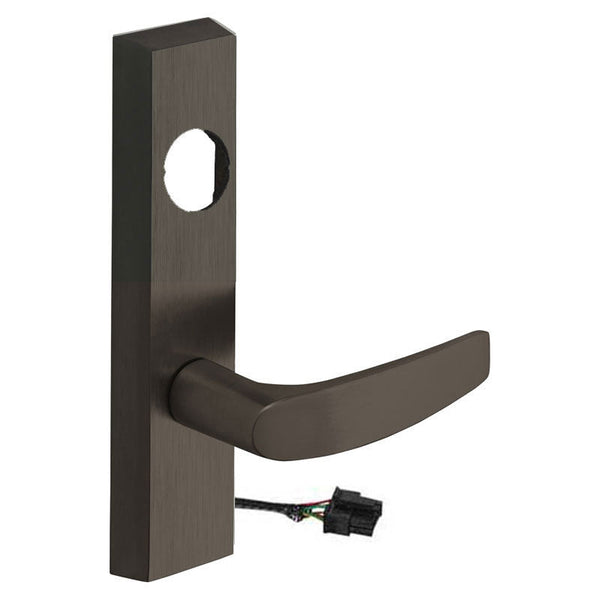
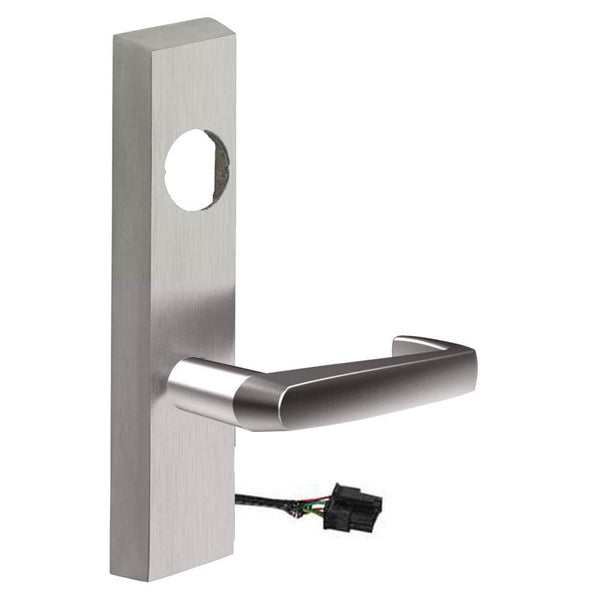
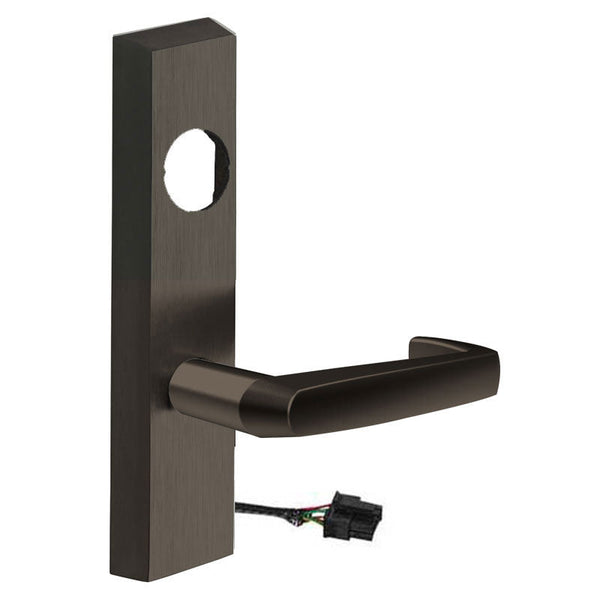
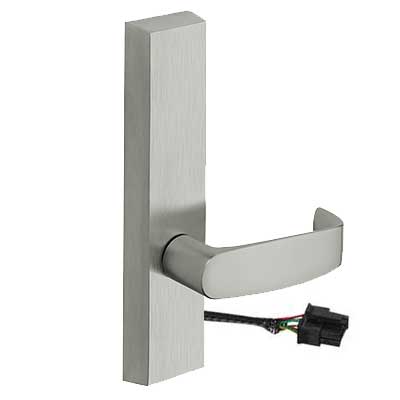
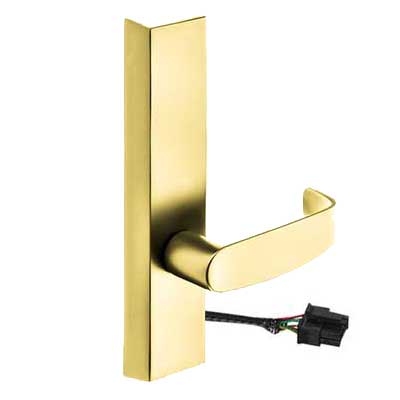
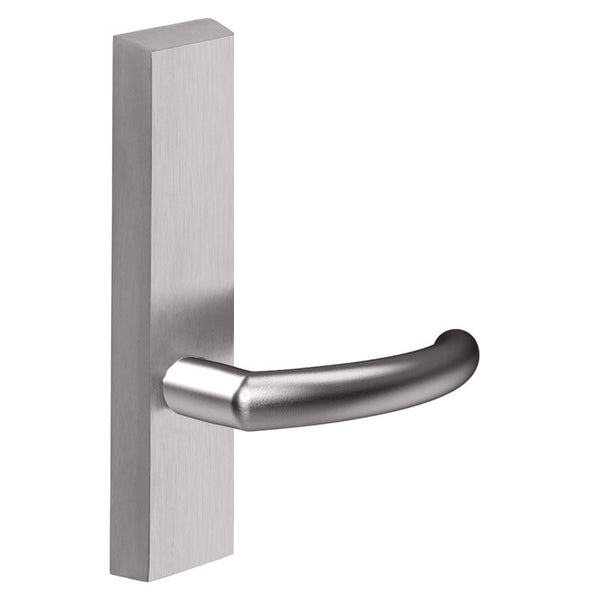
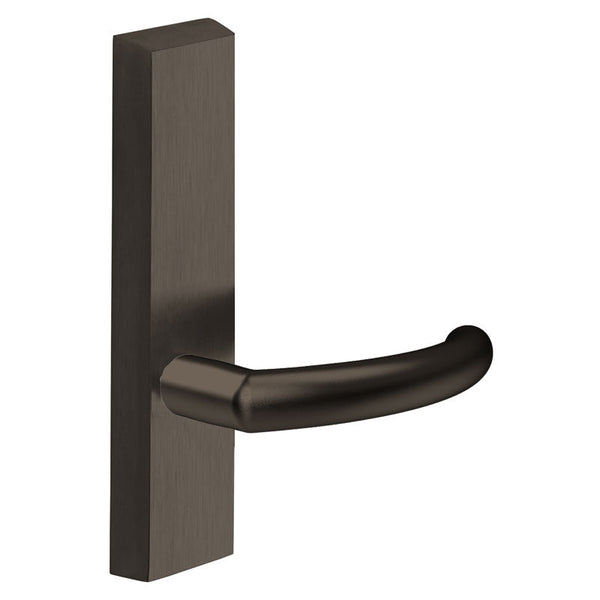
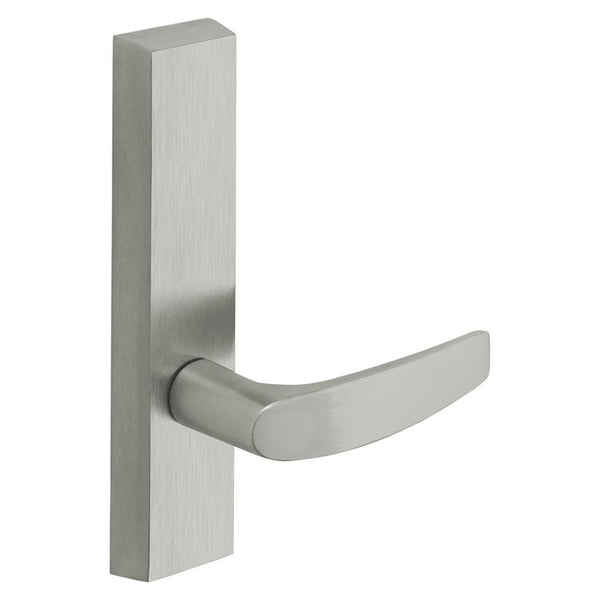
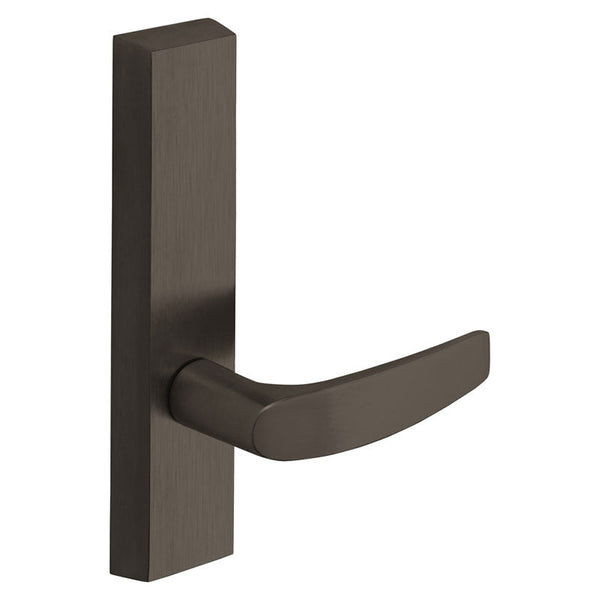


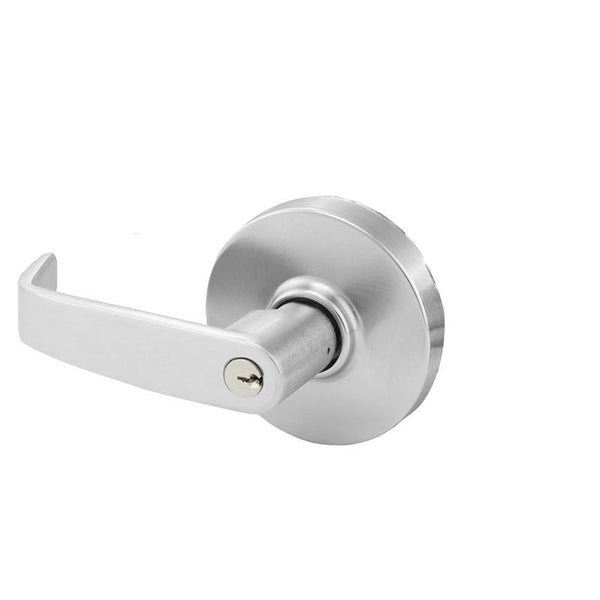
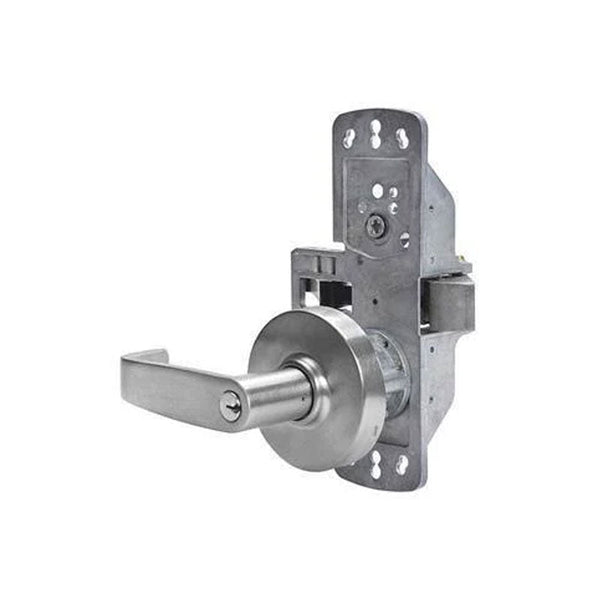
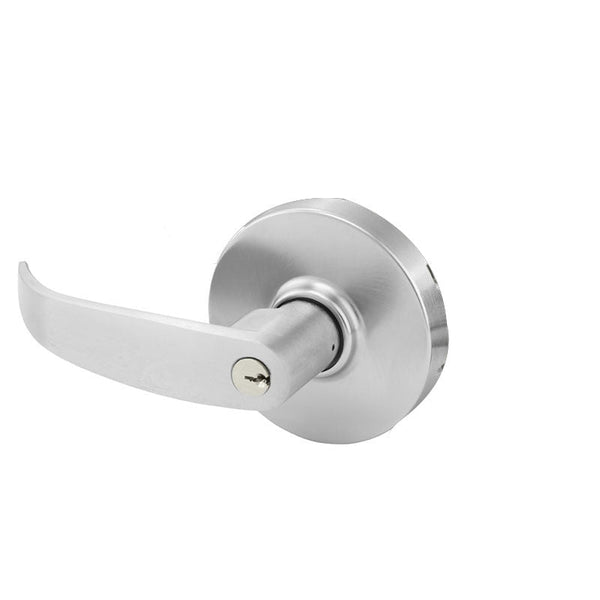
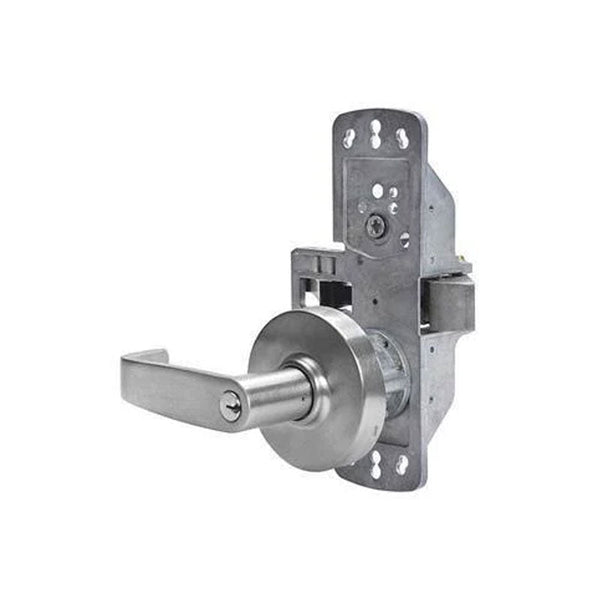
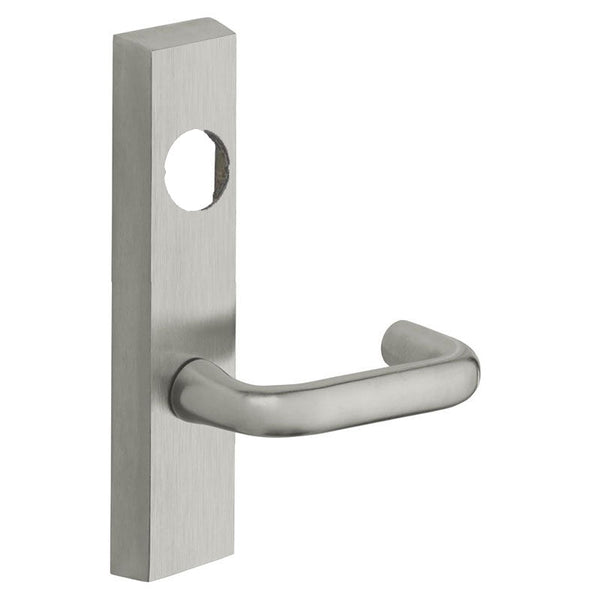
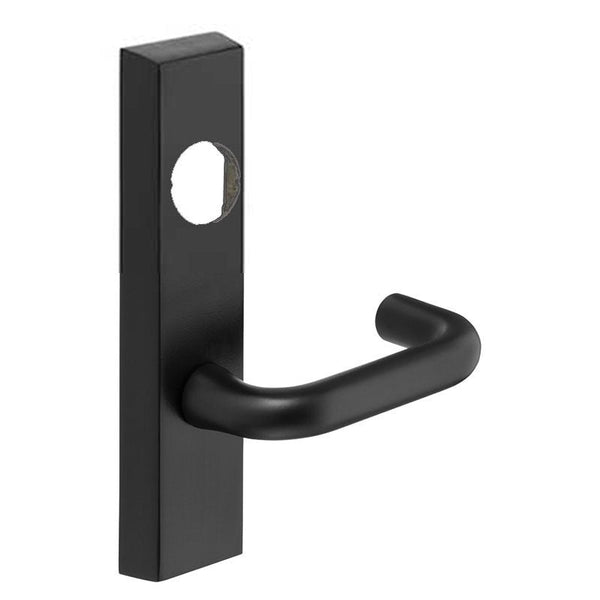
A panic bar handles the inside of the door. The trim decides what happens on the outside. Shop Sargent exit device trims for 80 Series exit devices, including ET lever trim, pull trim, and dummy trim in night latch, storeroom, classroom, and passage functions, plus electrified 12V and 24V trim in fail-safe and fail-secure. Matched to rim, surface vertical rod, concealed vertical rod, and mortise exit devices, in stock at Commercial Door Hardware and shipping the same day.
What an Exit Device Trim Does
An exit device on its own is a one-way door: push the bar from inside and it opens, but from outside there's nothing to grab and nothing to unlock. That's exactly right for an exit-only door. Most doors, though, also need people to come back in, whether that's anyone, only keyholders, or only someone who badges in.
Exit device trim is the outside half of that equation. Mounted on the exterior face of the door, it connects to the exit device and controls whether the outside lever or pull retracts the latch. The function you choose determines who gets in, while the push bar on the inside always lets everyone out.
That's the rule every trim is built around: the trim controls entry, never egress.
Sargent Trim Functions Explained
Sargent identifies the trim function by a two-digit number that appears in the device model, so an 8813 is an 8800 Series device with classroom function trim. The ANSI number is the industry-standard function reference used on hardware schedules.
|
Sargent function |
ANSI |
Name |
How the outside works |
|---|---|---|---|
|
04 |
03 |
Night latch |
Key retracts the latch; the lever or pull stays rigid |
|
06 |
09 |
Storeroom |
Key unlocks the trim, trim retracts the latch, and it relocks when the key is removed |
|
10 |
01 / 02 |
Exit only / dummy |
No outside operation; a dummy trim acts as a pull only |
|
13 |
08 |
Classroom |
Key locks and unlocks the outside trim |
|
15 |
14 |
Passage |
Trim always retracts the latch; no cylinder |
|
16 |
10 |
Classroom security |
Key outside retracts the latch; key inside locks and unlocks the outside trim |
|
73 |
— |
Electrified, fail safe |
Trim unlocks when power is removed |
|
74 |
— |
Electrified, fail secure |
Trim stays locked when power is removed |
Night latch and storeroom are the two most often confused. With night latch, only a key operates the latch, which suits doors that are rarely entered from outside. With storeroom, a key unlocks the trim so the lever can be turned, and it relocks automatically when the key comes out, so the door can't be left unlocked by accident.
Lever Trim, Pull Trim and Dummy Trim
|
Trim type |
What it is |
Best for |
|---|---|---|
|
ET lever trim |
Sargent's escutcheon trim with a lever, available in standard, classroom, storeroom, passage and electrified functions |
Accessible openings, schools, offices and healthcare where a lever is expected |
|
Pull trim |
A fixed pull with a cylinder, such as night latch pull trim, where a key retracts the latch |
Back-of-house and exterior doors where a pull is preferred |
|
Thumbpiece trim |
A pull with a thumbpiece that retracts the latch, in storeroom-style functions |
Narrow stile storefront doors where a lever won't fit |
|
Dummy trim |
A non-operating lever or pull, with no cylinder and no latch movement |
Doors that are dogged during the day and need something to pull |
Dummy trim matters more than it looks. On a dogged door, the latch is already retracted, so people simply need something to pull. A dummy trim gives them a handle without adding a way to operate the latch from outside.
Electrified Exit Trim: Fail Safe vs. Fail Secure
Electrified ET trim lets an access control system lock and unlock the outside lever remotely, so a card reader, keypad or schedule decides who gets in. Sargent electrified trim is specified in 12VDC or 24VDC.
|
Function |
On power loss |
Typical use |
|---|---|---|
|
73 – Fail safe |
Outside trim unlocks |
Openings that must allow re-entry during an outage, including some stairwell re-entry applications |
|
74 – Fail secure |
Outside trim stays locked |
Perimeter and secured doors that must stay locked if power fails |
In both cases, the inside push bar always opens the door. Fail safe and fail secure describe only the outside trim. Stairwell re-entry and fire alarm interface requirements vary by jurisdiction, so confirm the right function with your authority having jurisdiction.
Popular Sargent Exit Device Trims
|
Model |
Function |
Notes |
|---|---|---|
|
Sargent 704ET |
Night latch ET lever trim |
Key operates the latch; lever stays rigid. For 8800 and 8888 devices |
|
Sargent 713-8ET |
Classroom ET lever trim |
Key locks and unlocks the lever. For 8800 and 8888 devices |
|
Sargent 715-8ET |
Passage ET lever trim |
No cylinder; lever always operates. For 1-3/4" doors |
|
Sargent 715-4-ETME |
Passage ET trim, ME lever |
Non-keyed passage trim for 80 Series devices |
|
Sargent 814 PSB |
Night latch pull trim |
Key retracts the latch; for 8800 and 8888 devices |
|
Sargent 73 / 74 ET trim |
Electrified ET lever trim |
Fail safe (73) or fail secure (74), 12VDC or 24VDC |
Trim is specified by device series, door thickness, and function, so a trim built for an 8800 rim device isn't automatically right for an 8500 narrow stile device. Confirm the compatible device series listed on the product page before ordering.
Matching Trim to the Exit Device
|
Sargent series |
Device type |
Trim to consider |
|---|---|---|
|
8800 / 8888 |
Wide stile rim exit device |
ET lever trim, pull trim, electrified ET |
|
8500 |
Narrow stile rim exit device for aluminum doors |
Narrow stile ET, pull and thumbpiece trim |
|
8700 |
Surface vertical rod exit device |
ET lever and pull trim |
|
8600 (AD / MD / WD) |
Concealed vertical rod exit device |
ET lever trim, electrified ET |
|
8300 / 8900 |
Mortise lock exit device |
ET lever trim matched to the mortise function |
Lever Designs and Trim Options
-
Lever style is specified after the ET designation, so an ETL is ET trim with the L lever. Sargent also offers lever designs from its Coastal and Studio collections to match the building's lockset levers.
-
Freewheeling trim lets a locked lever turn freely rather than resisting, which protects the trim from people forcing it, a common source of damage in schools and public buildings.
-
Cylinders are specified separately on many trims, so the trim can be keyed into the building's master key or high security system.
-
Tactile warning options are available for openings that require them.
Available Finishes
Finish codes follow the BHMA system, with the older US designation shown alongside. The two codes describe the same finish, so 630 and US32D are interchangeable on a hardware schedule.
|
Code |
Finish |
Where it fits |
|---|---|---|
|
630 / US32D |
Satin stainless steel |
The standard exit hardware finish, resisting wear and frequent cleaning |
|
626 / US26D |
Satin chrome |
Matches satin chrome locksets and lever trim across the building |
|
613 / US10B |
Oil rubbed bronze |
Bronze and darker hardware schedules |
|
605 / US3 |
Bright brass |
Traditional polished brass entrances |
|
606 / US4 |
Satin brass |
Satin brass hardware schedules |
|
BSP |
Black suede powder coat |
Contemporary entrances and dark framing |
-
Match the trim finish to the exit device, since the two are seen together on opposite faces of the same door.
-
Check finish availability by model on the product page, since not every trim is offered in every finish.
Benefits of Sargent Exit Device Trims
-
Controlled re-entry without ever restricting egress.
-
A function for every opening, from passage to classroom security.
-
Electrified options in fail-safe and fail-secure for access control.
-
Lever trim that meets accessibility expectations on public openings.
-
Freewheeling option that resists abuse and vandalism.
-
Keyed to your system, with cylinders specified to match.
-
Finishes that match the exit device and the rest of the building hardware.
-
Ready to ship. In-stock trims ship the same day.
Applications
-
Classrooms using classroom or classroom security function to lock from the corridor.
-
Storerooms and mechanical rooms using storeroom function.
-
Corridor and cross-corridor doors using passage function.
-
Back-of-house and service doors using night latch pull trim.
-
Access-controlled entrances using electrified fail-secure trim.
-
Stairwell doors where re-entry requirements call for fail-safe trim.
-
Retail, hotel and office entrances dogged during business hours with dummy trim.
How to Specify Exit Device Trim
-
Identify the exit device series and stile width.
-
Decide who needs to get in from outside, and when.
-
Choose the function: night latch, storeroom, classroom, passage, exit only, or electrified.
-
Choose lever or pull, and the lever design if lever trim.
-
For electrified trim, choose fail safe or fail secure and 12VDC or 24VDC.
-
Confirm door thickness against the trim specifications.
-
Specify the cylinder and keying where the function is keyed.
-
Match the finish to the device and the rest of the opening.
Why Order Sargent Exit Trim from Commercial Door Hardware
Commercial Door Hardware supplies door hardware for schools, healthcare facilities, offices, retail, hospitality, and institutional buildings across the country, carrying exit devices, exit trim, locks, cylinders, closers, hinges, thresholds, weatherstripping, and the parts that go with them from Sargent, Von Duprin, Corbin Russwin, Accentra, Schlage, LCN, Norton, and Pemko.
Trim is where ordering mistakes happen most, because the right part depends on the device series, function, door thickness, and lever. We carry trim alongside the exit devices it fits, so device, trim, cylinder, and strike can be ordered together and arrive matched.
Every item in this collection is in stock at Commercialdoorhardware.com and ships the same day, because a failed exit opening is a life safety and security problem rather than a maintenance item. If you're matching existing hardware, send us the device model number, door width, finish, and a photo of the outside of the door, and we'll confirm the right part before you order.