
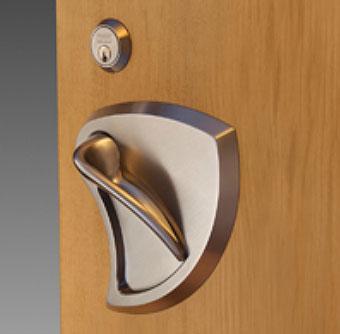
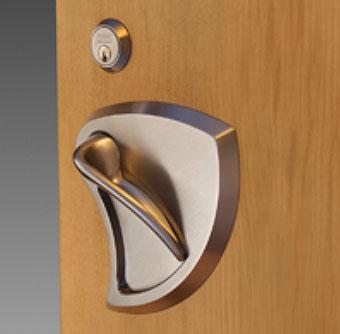
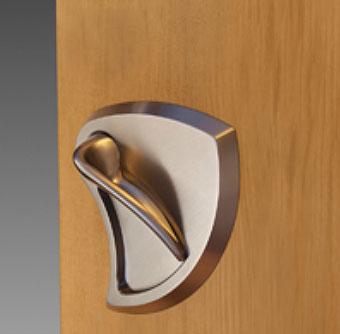
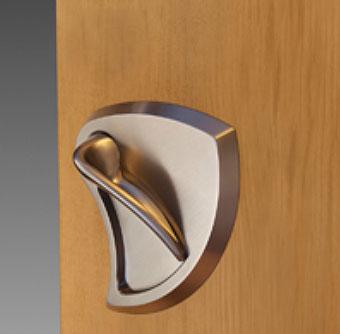
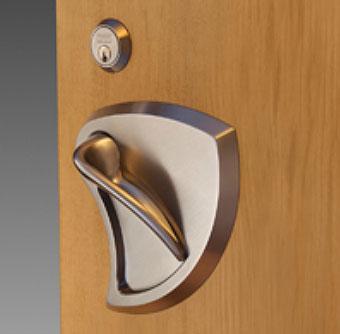
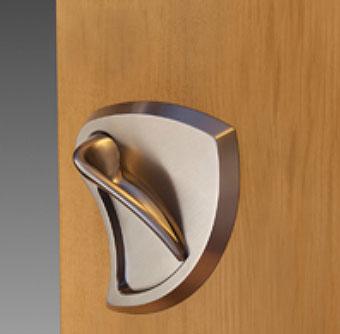
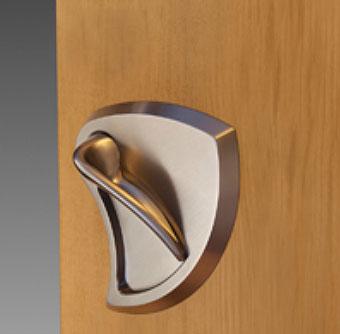
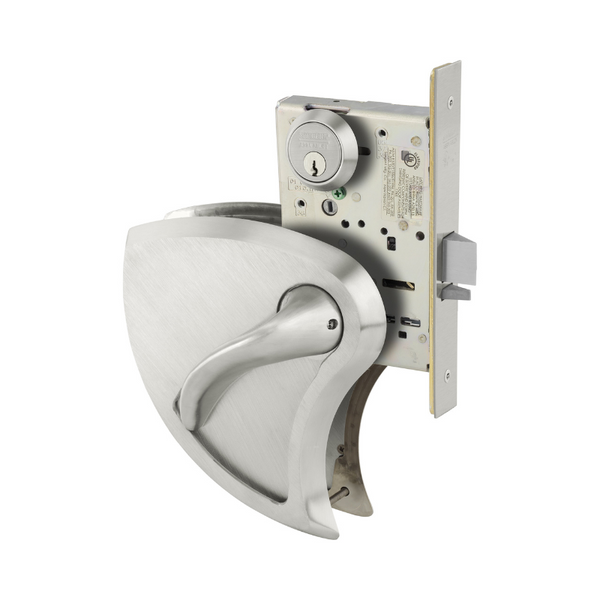
BHW is one of Sargent's behavioral health trim options for the 8200 Series mortise lock, for patient care openings where hardware has to resist deliberate force as well as present no attachment point. Shop the 8200 Series with BHW trim in stainless and plated finishes. In stock at Commercial Door Hardware and shipping the same day.
Abuse Resistance Is Part of the Specification
Ligature resistance and abuse resistance are different requirements that happen to apply to the same openings.
Ligature resistance is about geometry: no projection, no gap, nothing to attach to. A trim can satisfy that completely and still be pulled off the door.
Abuse resistance is about construction: material thickness, fastener strength, how the trim is anchored, whether it stays attached under sustained force. That's a separate property, and on a behavioral health opening it matters because hardware that detaches creates exactly the hazard the ligature-resistant geometry was meant to prevent, plus loose components.
A trim that comes away from the door has failed on both counts at once. Which is why the fastener specification on these openings carries as much weight as the profile.
|
Property |
What it addresses |
How it's achieved |
|---|---|---|
|
Ligature resistance |
Attachment points on the hardware |
Sloped, continuous, gap-free geometry |
|
Abuse resistance |
Hardware staying attached under force |
Material, anchoring and fastener specification |
|
Tamper resistance |
Hardware being deliberately disassembled |
Concealed or tamper-resistant fastener drives |
All three are needed. Review Sargent's documentation for the BHW trim to confirm how it addresses each, and compare it with the ALP and BHL options.
Fasteners Decide Whether It Holds
On a standard commercial opening, fasteners are an afterthought. Screws into the door face, tightened, done.
On a behavioral health opening, fasteners are structural. The trim is only as secure as what holds it, and two failure modes matter.
Pull-out. Screws threaded into a door face or into thin reinforcement can be worked loose under sustained force. Through-fastening, where a bolt passes through the door into a nut or mating trim on the other side, puts the door's full thickness in the load path instead.
Disassembly. A standard Phillips screw can be turned with a coin, a key or a fingernail given enough time. Tamper-resistant drive types, Torx among them, remove that option.
|
Fastener approach |
Resistance |
Where it belongs |
|---|---|---|
|
Screws into the door face |
Low |
Not appropriate on patient-accessible openings |
|
Through-bolts to mating trim |
High |
Standard practice on these openings |
|
Concealed fasteners |
High, plus no visible drive |
Where the trim design allows |
|
Tamper-resistant drives |
Prevents casual disassembly |
Everywhere on patient-accessible hardware |
Confirm the fastener arrangement specified for the BHW trim and follow it exactly. This is the part of the installation most likely to be substituted on site and the part where substitution matters most.
Inspection Over Time
Behavioral health hardware is not install-and-forget. It's tested repeatedly over its life, and small changes compound.
|
What to check |
Why |
|---|---|
|
Trim is tight to the door |
A trim working loose creates a gap where there was none |
|
No gap at the perimeter |
Gaps appear as fasteners loosen or the door moves |
|
Fasteners present and intact |
Missing or damaged fasteners are an early warning |
|
No visible drive heads where concealment was specified |
Indicates a substituted fastener |
|
Emergency release operates |
On every privacy opening |
|
Hinges, closer and stops unchanged |
The whole opening matters, not just the lock |
|
No deformation of the trim profile |
Bent trim can create an edge that wasn't there originally |
Build this into inspection rounds rather than waiting for a work order, and re-check after any maintenance on the opening, since a door adjusted or rehung can change clearances and gaps.
The Other Behavioral Health Trims
|
Trim |
Collection |
|---|---|
|
ALP |
Sargent 8200 with ALP Trim |
|
BHL |
Sargent 8200 with BHL Trim |
|
BHW |
Sargent 8200 with BHW Trim |
Compare the actual profiles, mounting arrangements and fastener specifications in Sargent's literature against your opening, and confirm the choice with the facility's clinical and safety staff.
Available Finishes
|
Code |
Finish |
Notes |
|---|---|---|
|
630 / US32D |
Satin stainless steel |
The usual specification, and the most durable under cleaning |
|
626 / US26D |
Satin chrome |
Where it matches the facility standard |
|
613 / US10B |
Oil rubbed bronze |
Where bronze is specified |
|
605 / US3 |
Bright brass |
Brass hardware schedules |
|
606 / US4 |
Satin brass |
Satin brass schedules |
-
630 satin stainless is the standard choice. Beyond appearance, stainless resists the cleaning agents used constantly in these environments, and a degraded plated finish can flake or create edges over time.
-
Confirm the finishes available for BHW trim specifically, since behavioral health trims carry narrower ranges than standard lever trim.
-
Match the finish across lock trim, hinges, closer, stops and any push or pull hardware.
Benefits
-
Ligature-resistant geometry with no projection or gap.
-
Construction suited to deliberate abuse, so the trim stays attached.
-
Tamper-resistant fasteners where available.
-
Uses the standard 8200 case, keeping keying and service consistent.
-
Full-function range including privacy with emergency staff access.
-
Stainless finish option that holds up to constant cleaning.
-
Specified alongside matching hinges, closers and rescue hardware.
-
Ready to ship. In-stock locks ship the same day.
Applications
-
Behavioral health patient rooms and bathrooms.
-
Psychiatric hospital patient-accessible areas.
-
Emergency department safe rooms and observation areas.
-
Acute psychiatric units where hardware is tested regularly.
-
Correctional medical units with patient-accessible openings.
-
Substance treatment facilities.
-
Pediatric behavioral units.