
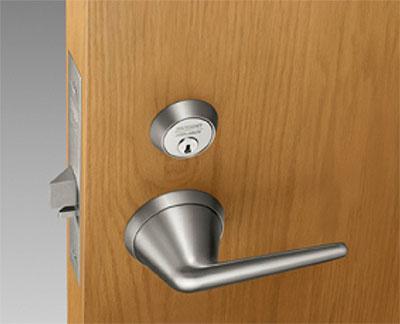
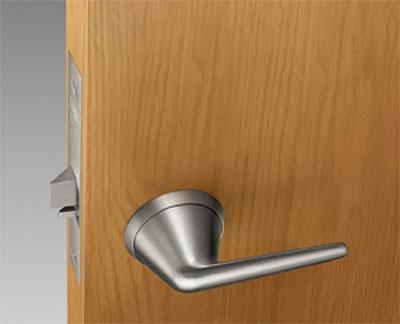
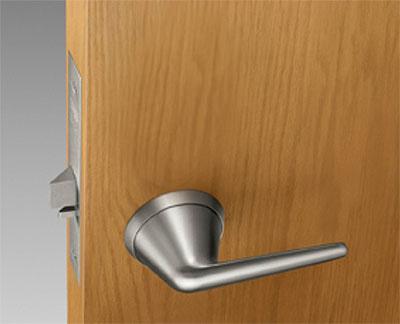
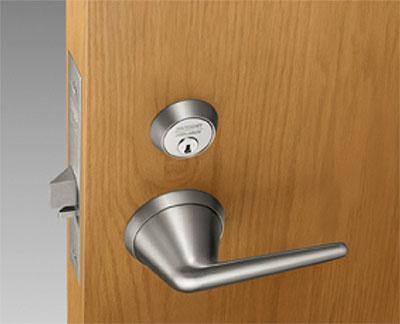
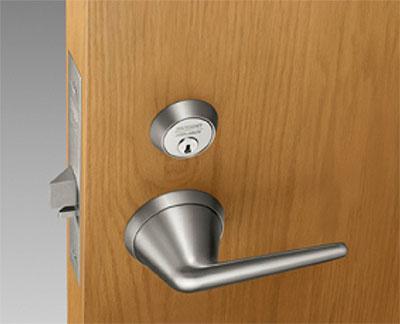
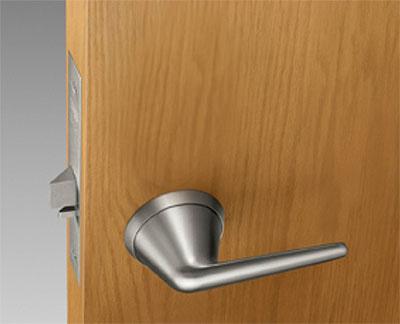
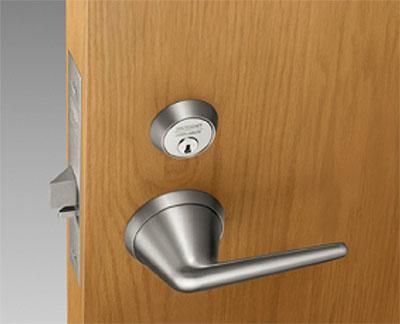
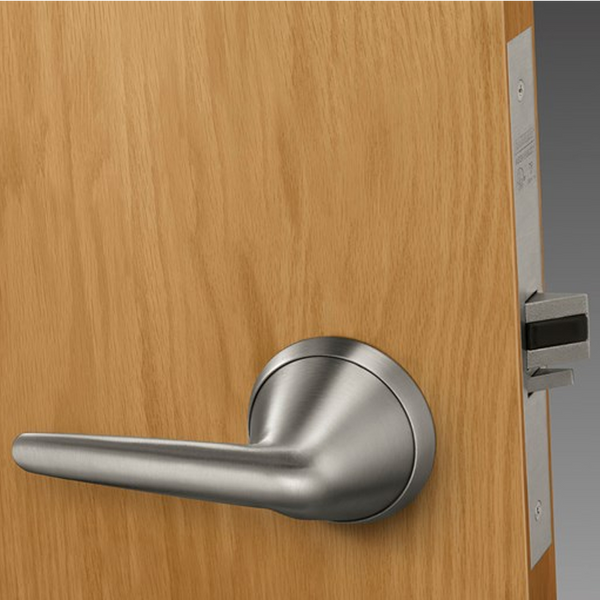
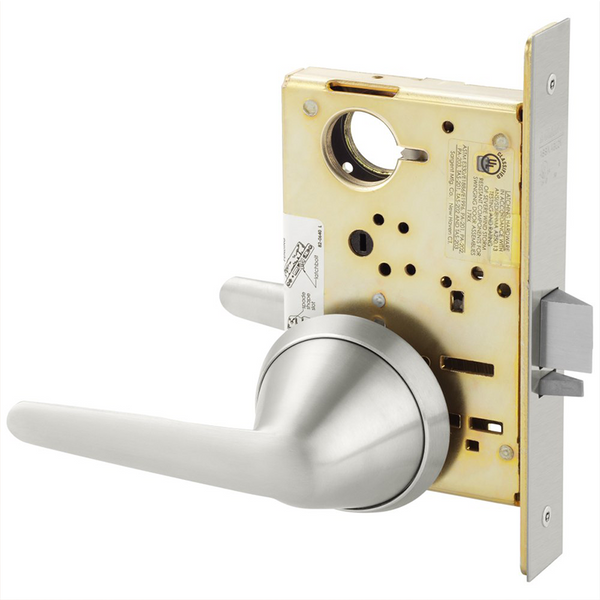
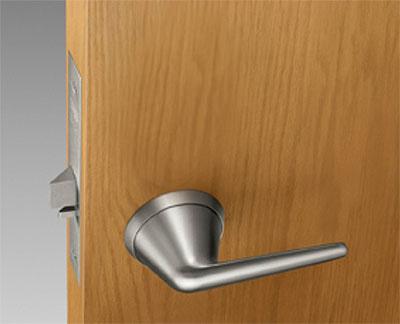
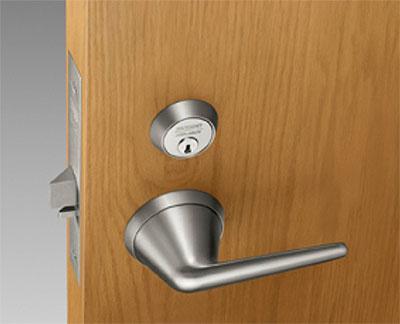
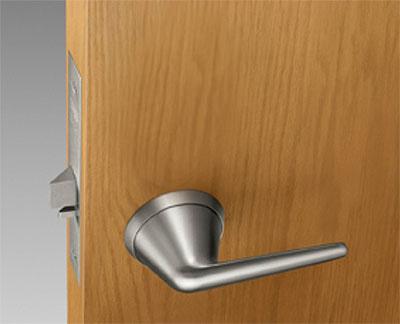
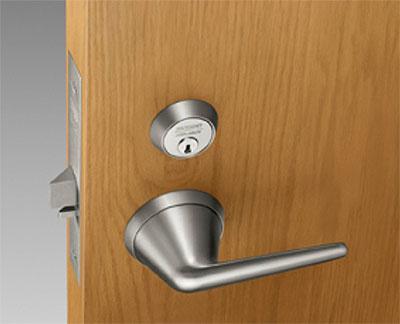
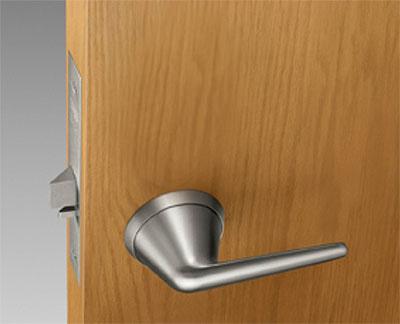
BHL is one of Sargent's behavioral health trim options for the 8200 Series mortise lock. It pairs ligature-resistant geometry with the lock functions a patient care opening needs, including privacy with reliable emergency staff access. Shop the 8200 Series with BHL trim in stainless and plated finishes. In stock at Commercial Door Hardware and shipping the same day.
Function Is the Other Half of the Specification
Ligature resistance gets most of the attention on behavioral health openings, and it should: the trim geometry is what removes attachment points from the door. But geometry only answers one question. The other is who can open this door, under what circumstances, and that's the lock function.
Get the function wrong and the opening fails in a different way. A patient room with no way for the patient to secure it compromises dignity. A patient room staff can't get into quickly compromises safety. Both are specification failures, and neither is solved by the trim.
|
Function |
What the patient can do |
What staff can do |
Typical opening |
|---|---|---|---|
|
Privacy |
Secure the door from inside |
Enter via the emergency release |
Patient rooms, patient bathrooms |
|
Classroom |
Use the door freely |
Lock and unlock from the corridor by key |
Treatment and activity rooms |
|
Storeroom |
Cannot enter |
Enter by key |
Medication, supply, staff-only rooms |
|
Passage |
Use the door freely |
Use the door freely |
Openings that shouldn't lock |
Free egress from inside applies on every function here. That's a code requirement, not a design choice.
Emergency Staff Access Is the Critical Path
On any privacy function opening, there is deliberately no key from the corridor. The patient controls the door. That's the point of a privacy function, and it's also why the emergency release matters more than any other feature on the opening.
The hardware side is straightforward: the release exists and works. The failures are almost always procedural.
|
Failure mode |
What prevents it |
|---|---|
|
Release tool can't be found |
Documented storage location, known to all staff |
|
Only one tool for the unit |
Keep multiple tools distributed |
|
Staff don't know it exists |
Include it in orientation and refresher training |
|
Staff haven't used it before |
Practice before it's needed, not during |
|
Tool lost and never replaced |
Periodic checks that it's still present |
|
Release stopped working |
Include it in inspection rounds |
A privacy opening with a working release and no accessible tool is functionally a locked door. Treat the tool as part of the hardware specification rather than an accessory to it.
What BHL Trim Addresses
Ligature-resistant trim designs share a common set of objectives, achieved differently by each specific trim.
|
Objective |
How it's achieved |
|---|---|
|
No horizontal projection |
Surfaces slope back toward the door face |
|
No gap behind the trim |
Escutcheon or rose sits flush to the door |
|
No graspable edge |
Continuous profile without undercuts or lips |
|
Tamper resistance |
Concealed or tamper-resistant fastener drives |
|
Abuse tolerance |
Construction suited to environments where hardware gets tested |
|
Operability |
Still usable as a door handle by patients and staff |
That last objective is the one in tension with the others. Hardware with nothing to grasp is harder to operate, and the balance between the two is where the specific trim designs differ. Review Sargent's documentation for the BHL trim against your opening, and compare it with the ALP and BHW options before deciding.
The Other Behavioral Health Trims
|
Trim |
Collection |
|---|---|
|
ALP |
Sargent 8200 with ALP Trim |
|
BHL |
Sargent 8200 with BHL Trim |
|
BHW |
Sargent 8200 with BHW Trim |
Compare the actual profiles and mounting details in the manufacturer's literature rather than choosing from a category description, and confirm the selection with the facility's clinical and safety staff.
Available Finishes
|
Code |
Finish |
Notes |
|---|---|---|
|
630 / US32D |
Satin stainless steel |
The usual specification in behavioral health |
|
626 / US26D |
Satin chrome |
Where it matches the facility standard |
|
613 / US10B |
Oil rubbed bronze |
Where bronze is specified |
|
605 / US3 |
Bright brass |
Brass hardware schedules |
|
606 / US4 |
Satin brass |
Satin brass schedules |
-
630 satin stainless is the standard choice, because behavioral health environments are cleaned constantly with strong agents that degrade plated finishes.
-
Confirm the finishes available for BHL trim specifically, since behavioral health trims carry narrower ranges than standard lever trim.
-
Match the finish across the lock trim, hinges, closer, stops and any push or pull hardware.
Benefits
-
Ligature-resistant geometry with no graspable projection or gap.
-
Full function range, including privacy with emergency staff access.
-
Uses the standard 8200 case, keeping keying and service consistent building-wide.
-
Tamper-resistant fasteners where available.
-
Stainless finish option for environments cleaned frequently.
-
Free egress on every standard function.
-
Specified alongside matching hinges, closers and rescue hardware.
-
Ready to ship. In-stock locks ship the same day.
Applications
-
Patient rooms using privacy function with emergency staff access.
-
Patient bathrooms where privacy matters and staff access is essential.
-
Treatment and activity rooms using classroom function.
-
Medication and supply rooms using storeroom function.
-
Emergency department safe rooms and observation areas.
-
Substance treatment facility accommodation.
-
Pediatric behavioral units.