
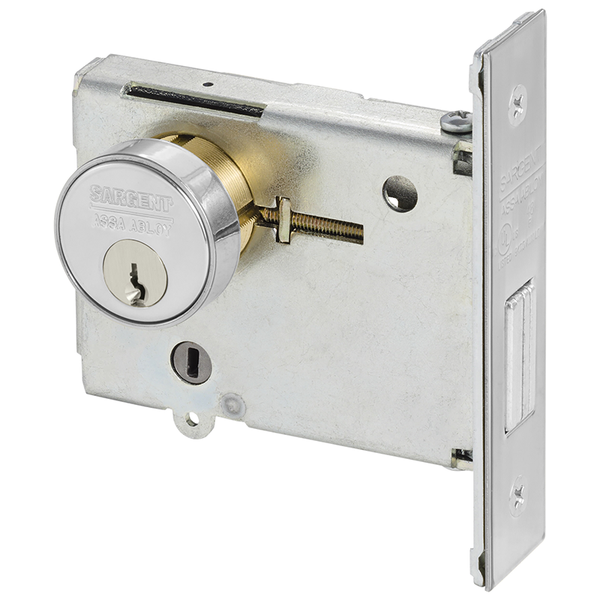
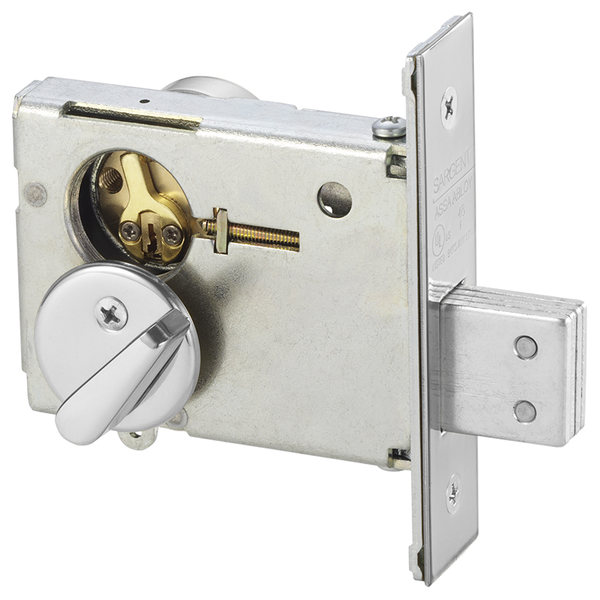
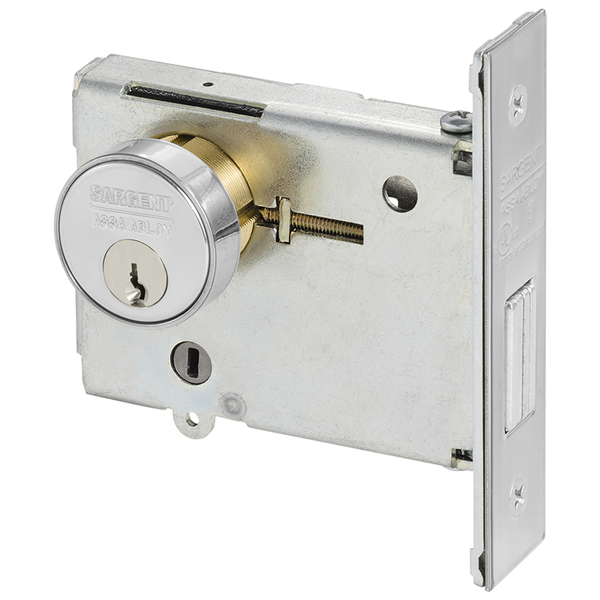
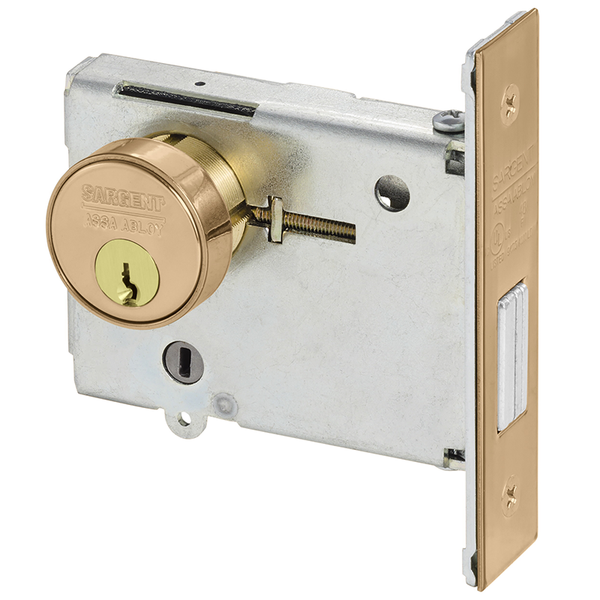
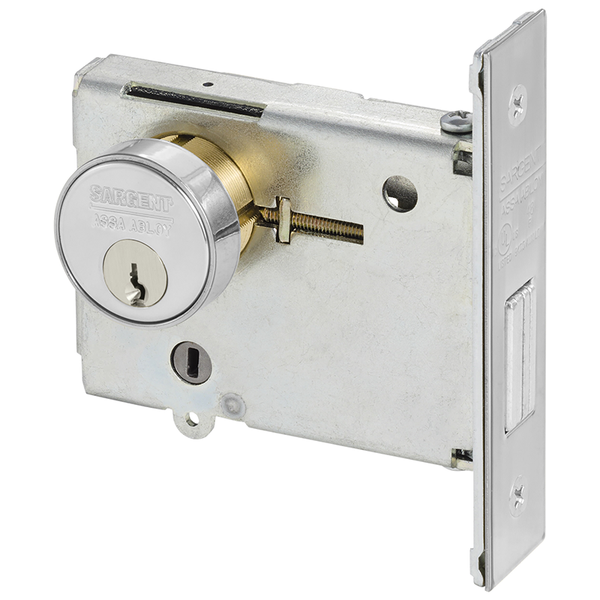
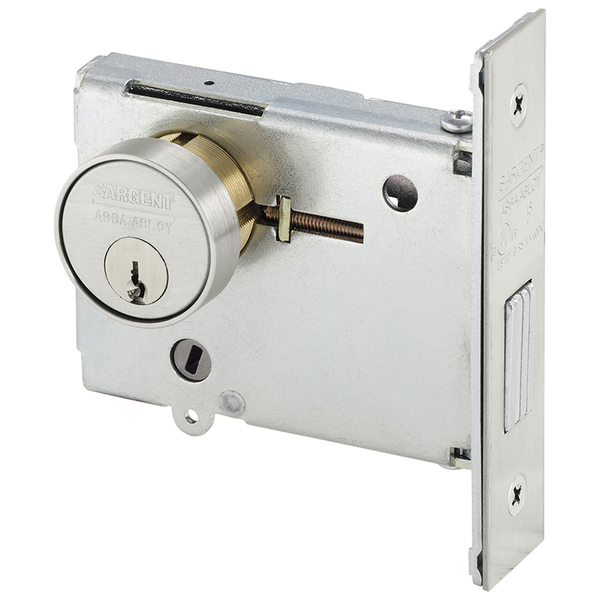
A deadlock and a deadlatch solve different problems, and the names get used interchangeably when they shouldn't be. Shop mortise deadlocks and deadlatches for commercial doors, including single and double cylinder deadlocks, deadlatch units and auxiliary locks, from Sargent, Schlage, Accentra and Corbin Russwin. In stock at Commercial Door Hardware and shipping the same day.
Deadlock vs. Deadlatch
These are genuinely different devices, and confusing them leads to ordering the wrong hardware.
A deadlock throws a solid bolt into the frame. The bolt has no bevel and no spring: it doesn't retract when the door closes and it can't be pushed back. It has to be thrown and withdrawn deliberately, by key or thumbturn. That makes it a security device, used where a door needs to be locked and stay locked.
A deadlatch is a latch with an anti-carding feature. Like any latch it has a bevelled bolt that retracts when the door closes and springs out to catch the strike. The difference is a small plunger beside the main bolt. When the door is closed, that plunger rests against the strike face and mechanically blocks the latch from being pushed back. It stops the door being opened with a card or shim.
|
Feature |
Deadlock |
Deadlatch |
|---|---|---|
|
Bolt type |
Solid, square-ended bolt |
Bevelled spring latch |
|
Operation |
Thrown deliberately by key or turn |
Retracts automatically on closing |
|
Self-latching |
No |
Yes |
|
Security purpose |
Resists force and prying |
Resists carding and shimming |
|
Typical use |
Secondary security, after-hours locking |
Primary latching on most commercial doors |
In short: a deadlock is about force resistance, a deadlatch is about manipulation resistance. Many openings use both, with a deadlatch handling everyday latching and a deadlock adding security when the building is closed.
Single vs. Double Cylinder Deadlocks
|
Type |
Outside |
Inside |
Consideration |
|---|---|---|---|
|
Single cylinder |
Key |
Thumbturn |
Occupant can unlock without a key |
|
Double cylinder |
Key |
Key |
Key required from both sides |
|
Classroom deadlock |
Key |
Key or turn depending on model |
Specified for specific institutional uses |
Double cylinder deadlocks raise an egress question. If a key is required to leave, a person inside without a key can't get out. Egress codes restrict where that's permissible, and in most occupancies it isn't. Before specifying a double cylinder deadlock, confirm with your authority having jurisdiction that it's permitted on the opening, and check whether the building's occupancy allows it at all.
A single cylinder deadlock with a thumbturn inside generally satisfies egress because no key is needed to leave, though the requirement for a single motion to exit still applies when a separate latch is also present.
The Two-Motion Problem
This is the issue that catches people out on openings with both a latch and a separate deadbolt.
Egress codes generally require a door to open with one motion. If a person has to retract a deadbolt and then operate a latch, that's two motions, and on most openings it isn't permitted.
Three ways around it:
-
Interconnected locks, where turning the inside lever retracts both the latch and the deadbolt in one motion.
-
Mortise lock functions with an integral deadbolt, where the lock case handles both and the inside lever retracts both together.
-
Deadbolt only where permitted, on openings that aren't in the egress path or where the occupancy allows it.
Where a separate auxiliary deadlock is fitted above a latching lockset, confirm the arrangement is permitted for that opening rather than assuming it is.
Available Finishes
|
Code |
Finish |
Notes |
|---|---|---|
|
626 / US26D |
Satin chrome |
The most widely stocked |
|
605 / US3 |
Bright brass |
Brass hardware schedules |
|
606 / US4 |
Satin brass |
Satin brass schedules |
|
612 / US10 |
Satin bronze |
Bronze schedules |
|
613 / US10B |
Oil rubbed bronze |
Darker bronze schedules |
|
625 / US26 |
Bright chrome |
Polished chrome schedules |
|
630 / US32D |
Satin stainless steel |
Exterior and frequently cleaned openings |
|
622 |
Matte black |
Contemporary schedules |
-
The cylinder face and thumbturn are the visible parts, so match them to the lockset and other trim on the door.
-
630 satin stainless suits exterior openings, where a deadlock often sits on a service or back door exposed to weather.
-
626 satin chrome is the default and carries the deepest stock.
-
Strikes are visible on the frame and should match too.
Benefits
-
Deadlocks resist force in a way a spring latch cannot.
-
Deadlatches resist carding, which a plain spring latch cannot.
-
Secondary security on openings that need more than a latch after hours.
-
Thumbturn operation inside on single cylinder models, supporting egress.
-
Replaceable separately from the primary lockset.
-
Various cylinder options to match the building's key system.
-
Available in stainless for exterior and service openings.
-
Ready to ship. In-stock deadlocks and deadlatches ship the same day.
Applications
-
Service and back doors needing security beyond a latch.
-
Stock rooms and storage locked after hours.
-
Retail back-of-house openings.
-
Office suites with after-hours locking.
-
Doors with narrow stiles where a mortise deadlock suits the available space.
-
Deadlatch replacements on cylindrical locksets where carding is a concern.
-
Upgrading plain spring latches to deadlatches on secured openings.
-
Mechanical and electrical rooms.
Everything in this collection is in stock at Commercialdoorhardware.com and ships the same day.