
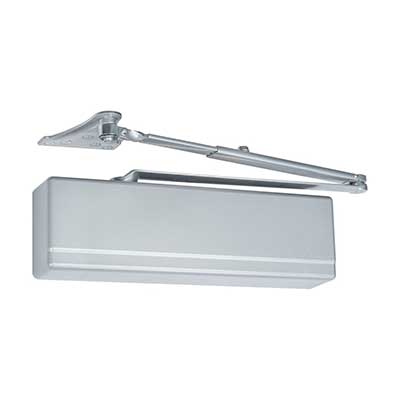
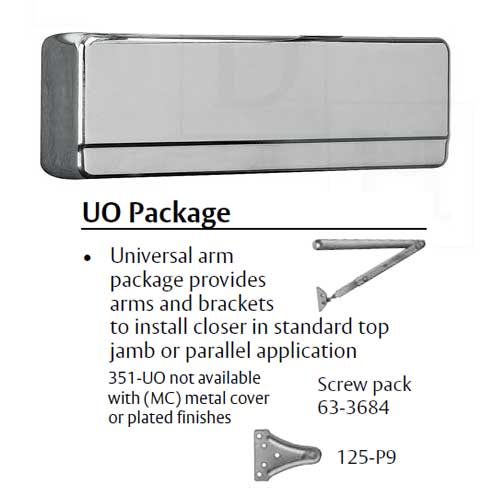
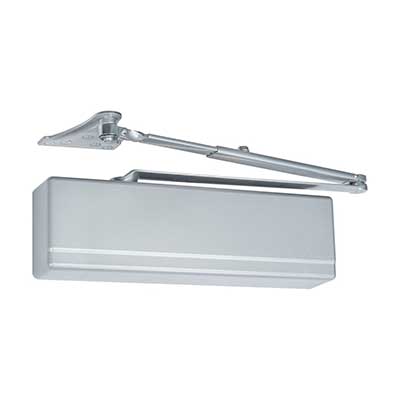
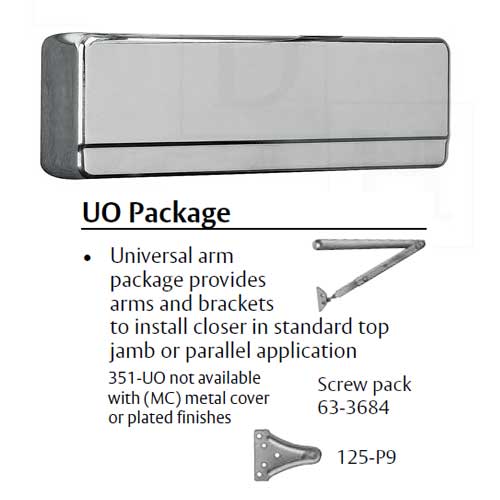
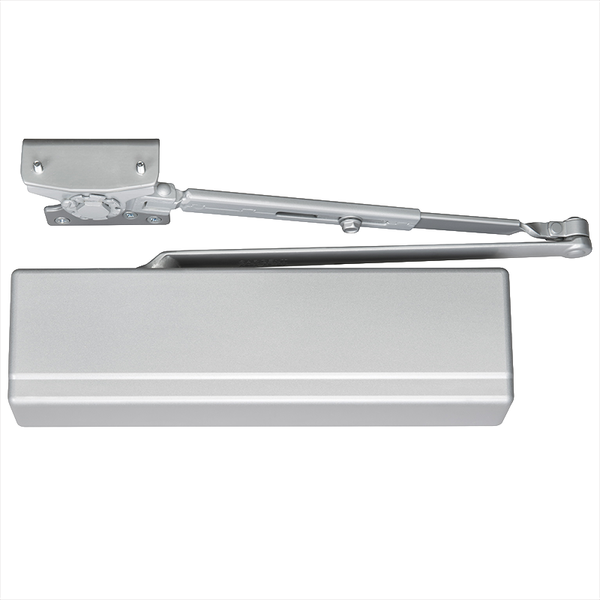
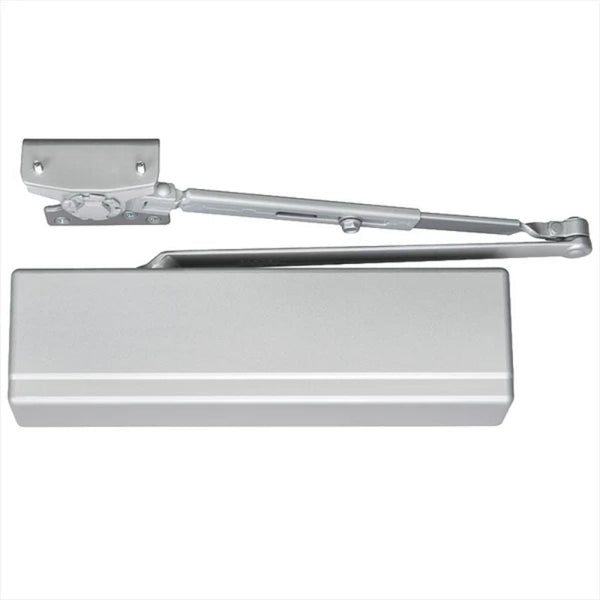
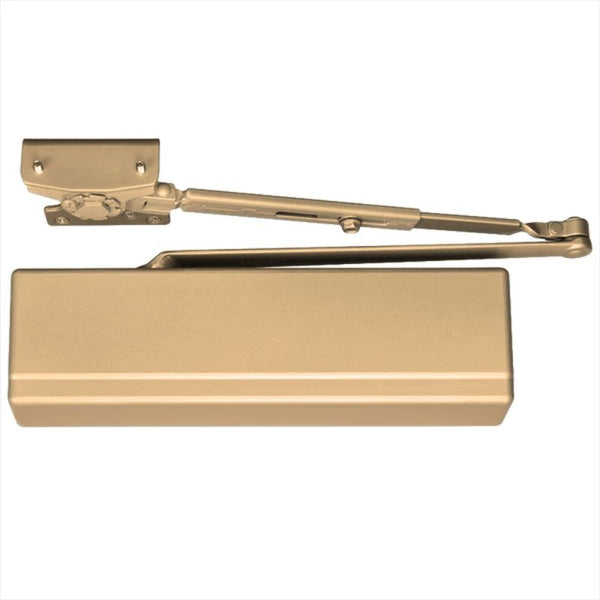
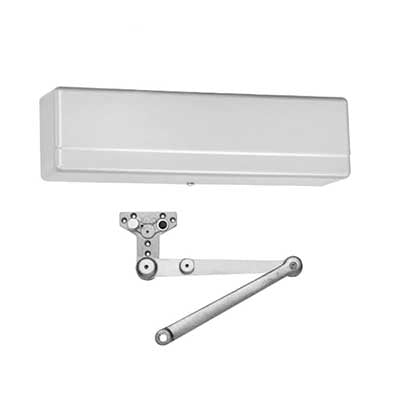
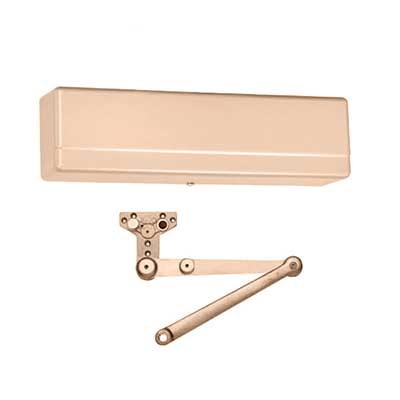
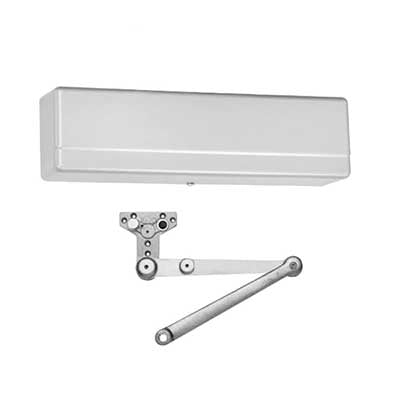
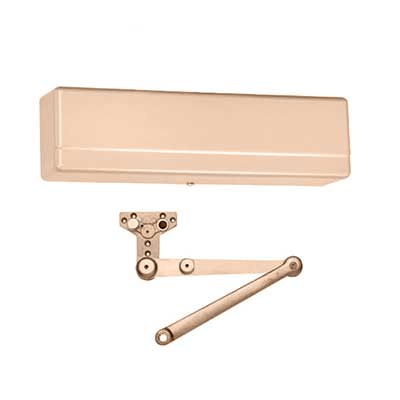
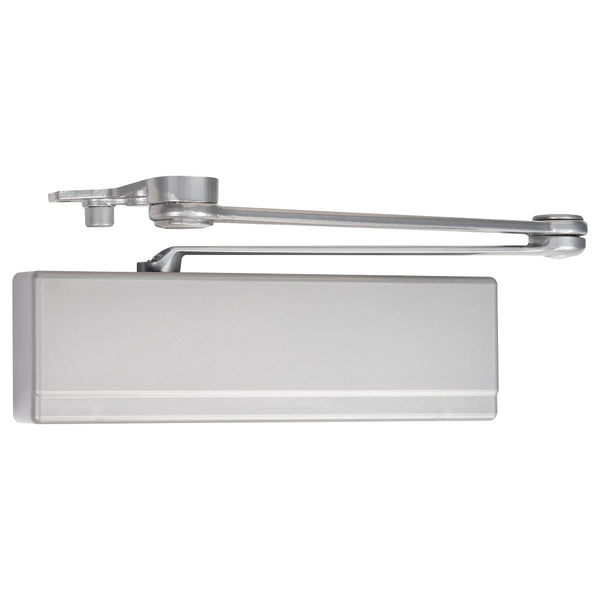
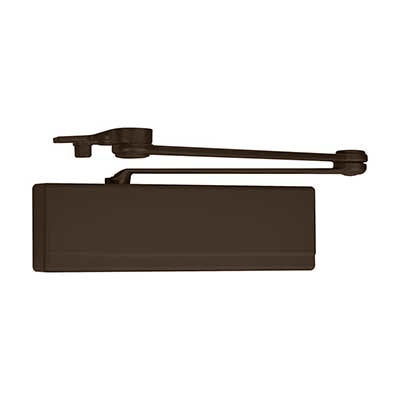
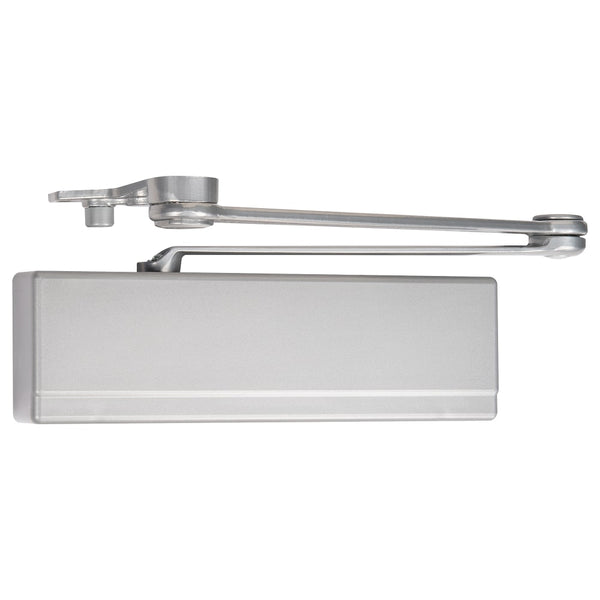
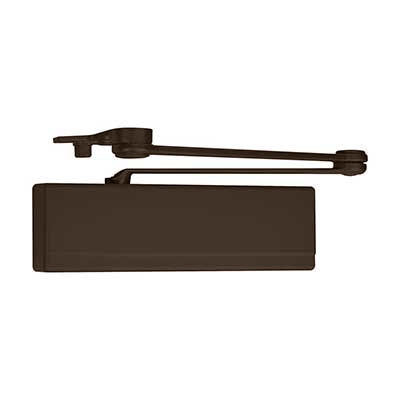
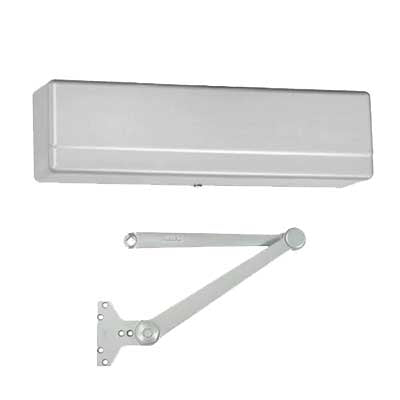
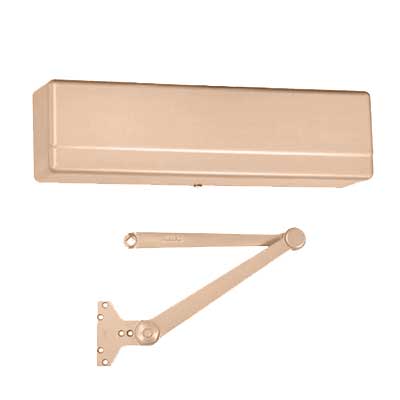
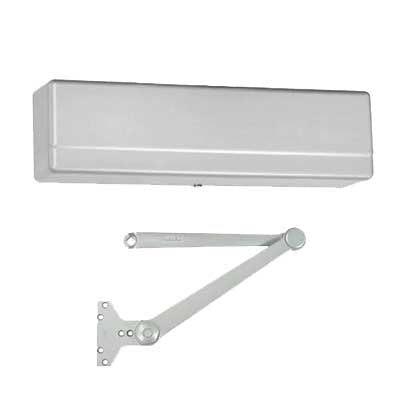
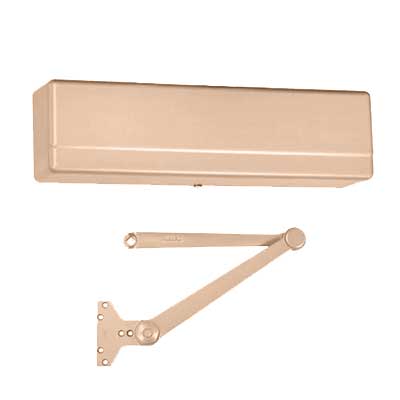
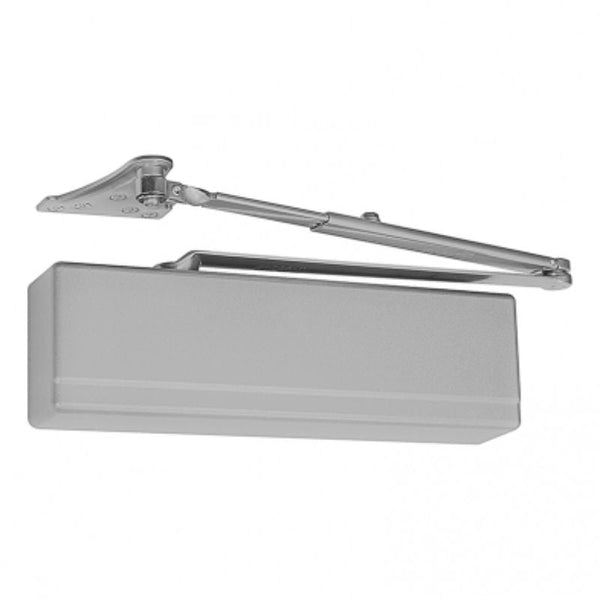
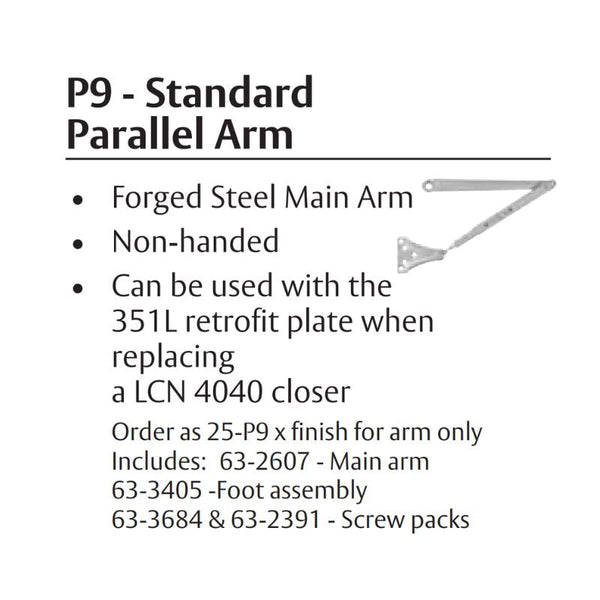
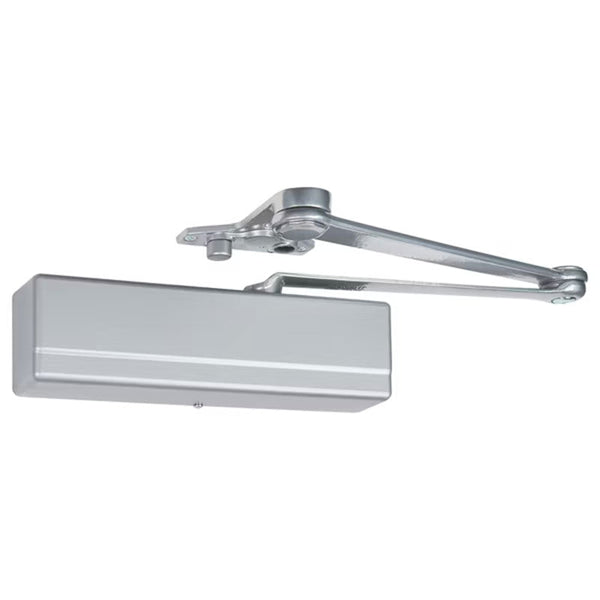
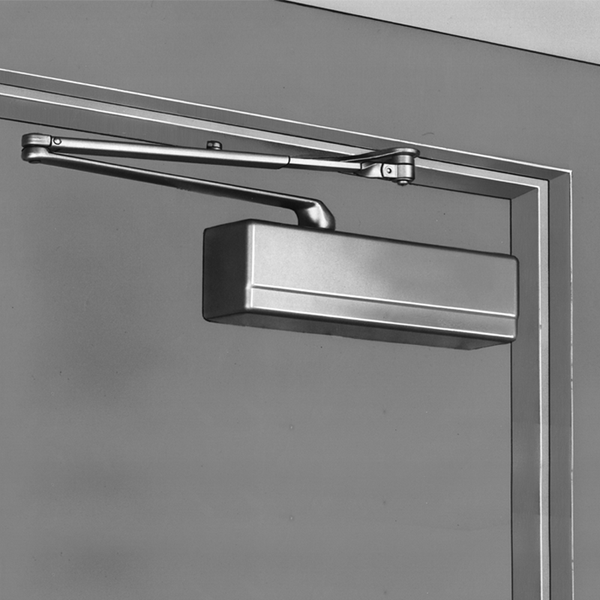
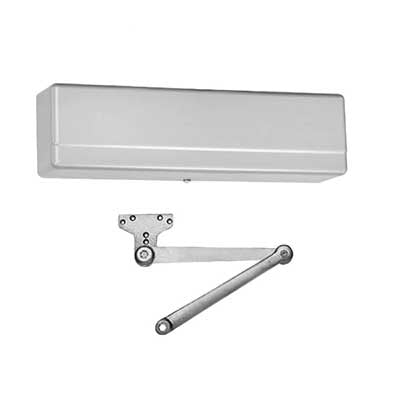
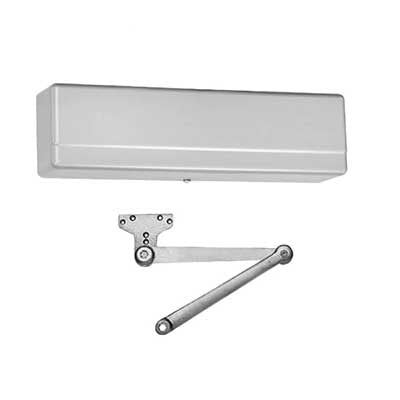
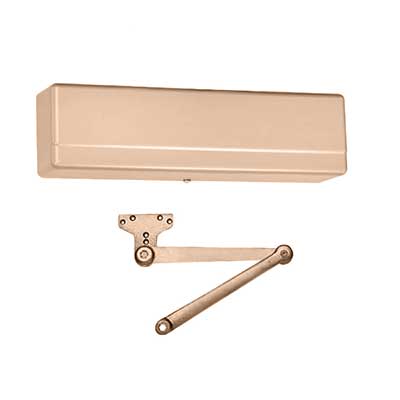
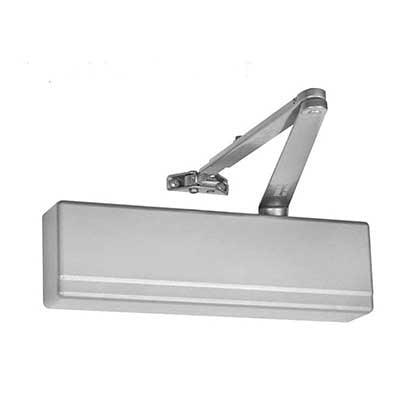
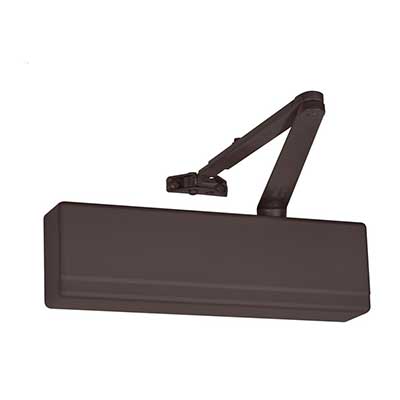
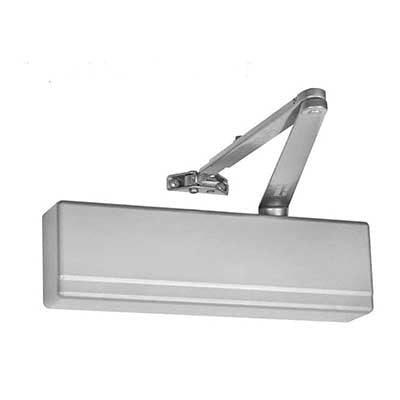
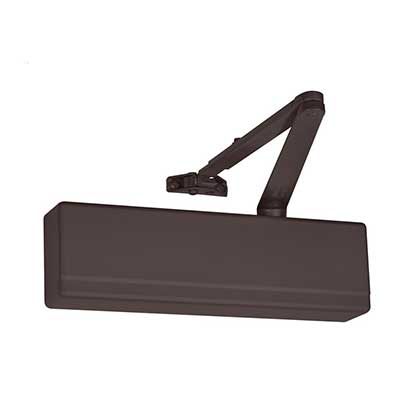
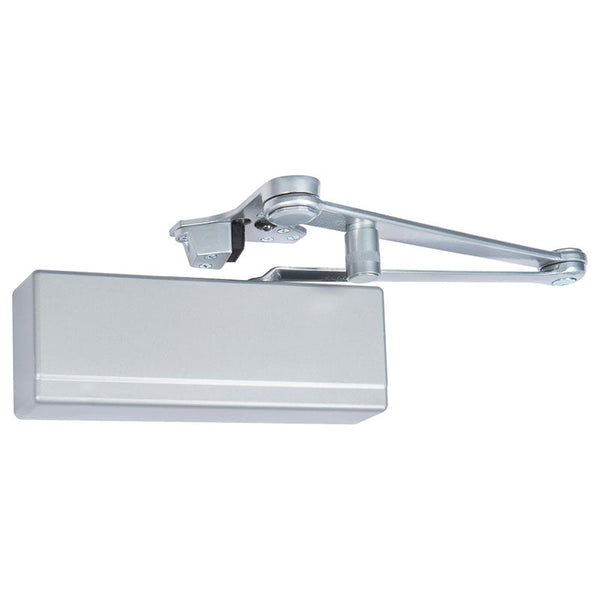
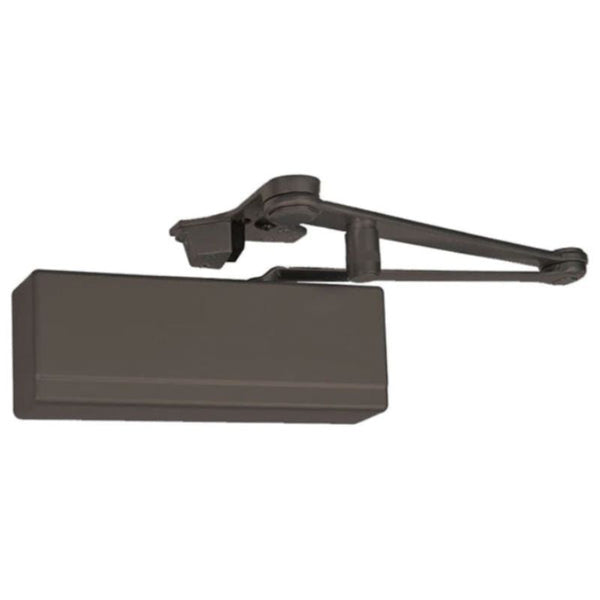
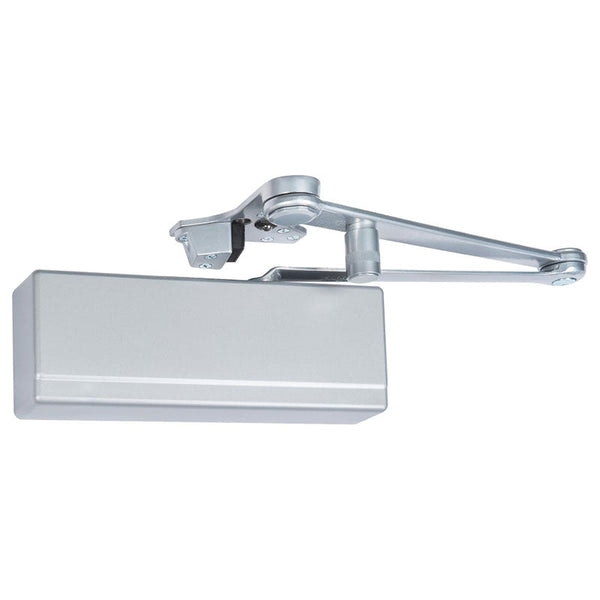
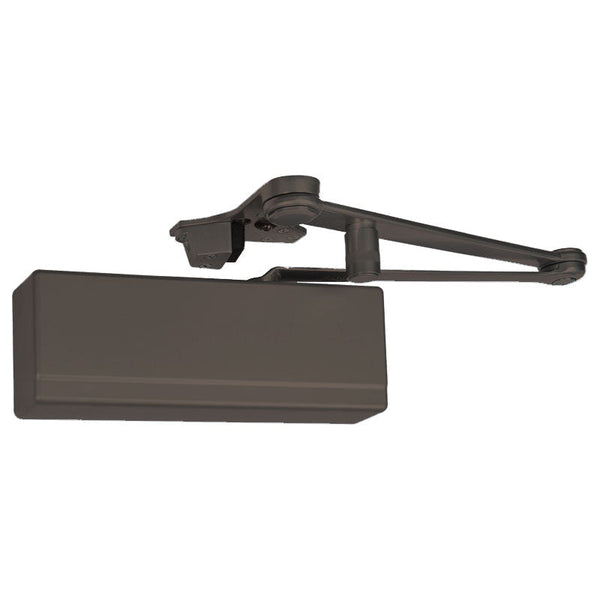
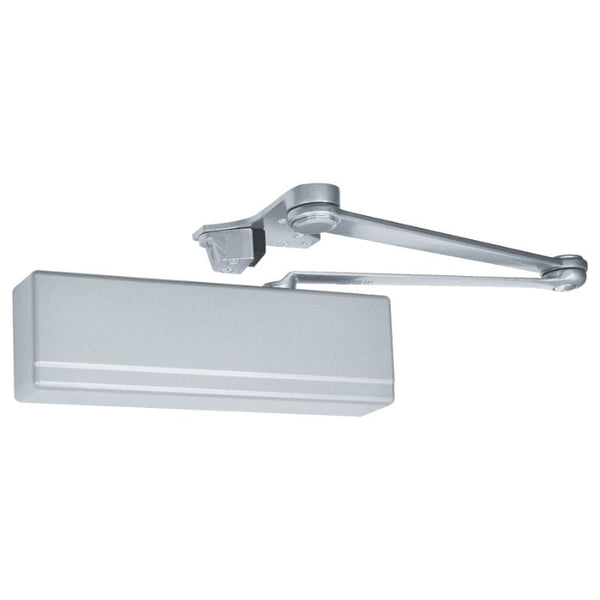
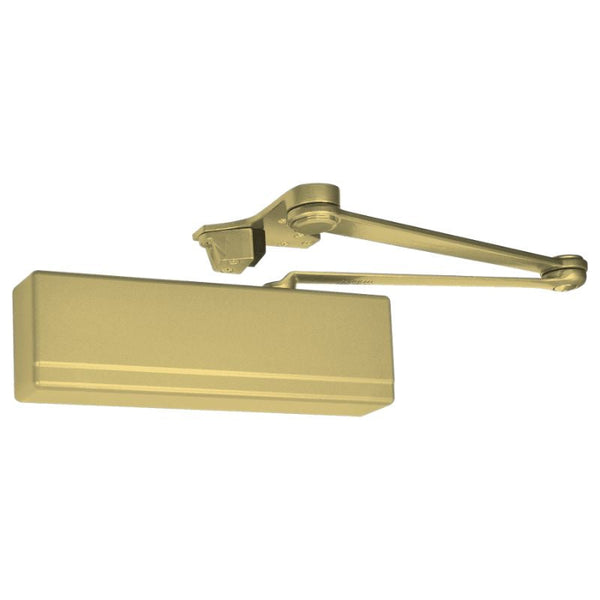
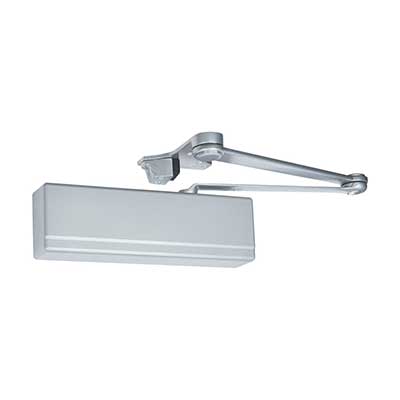
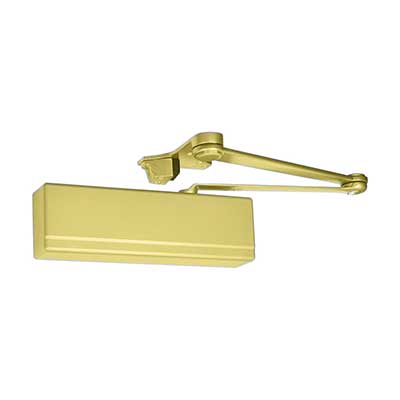
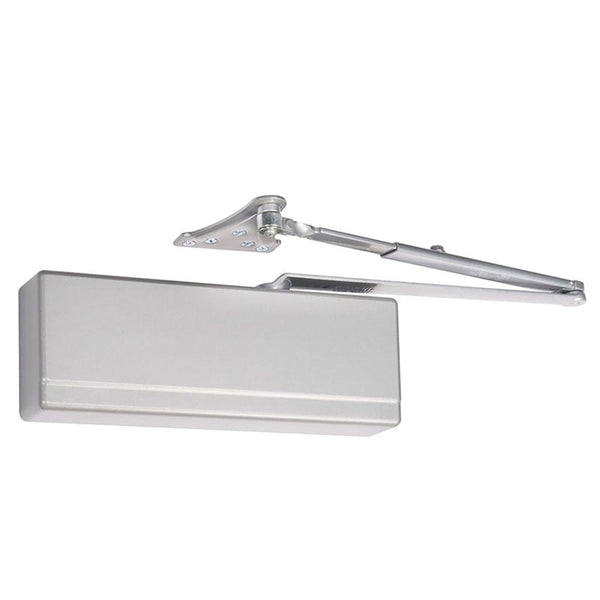
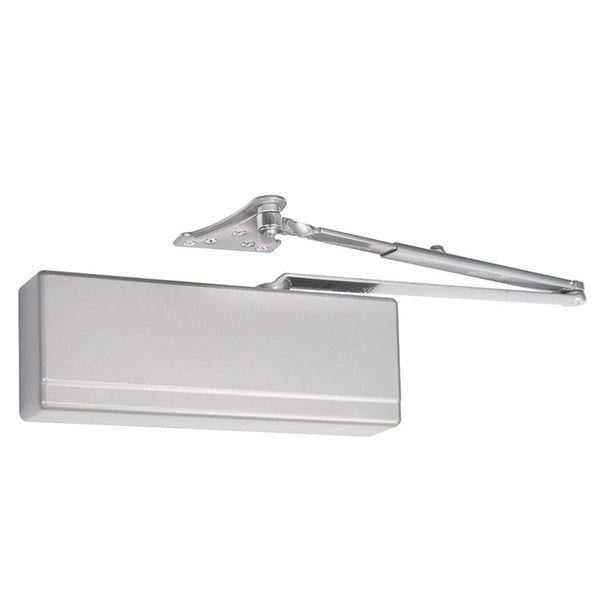
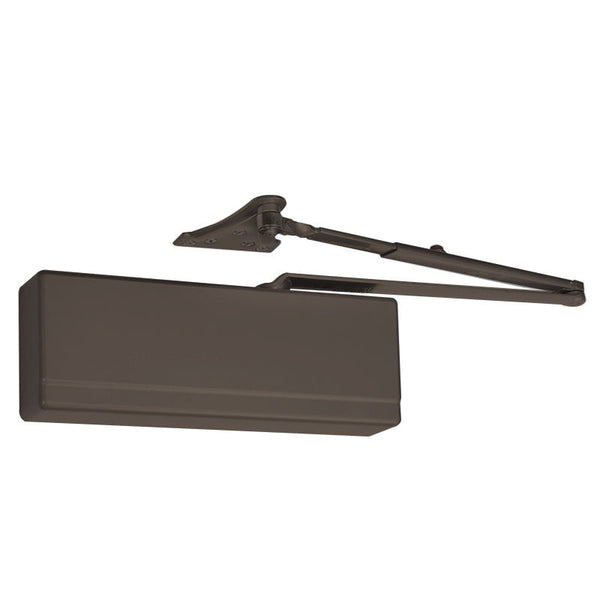
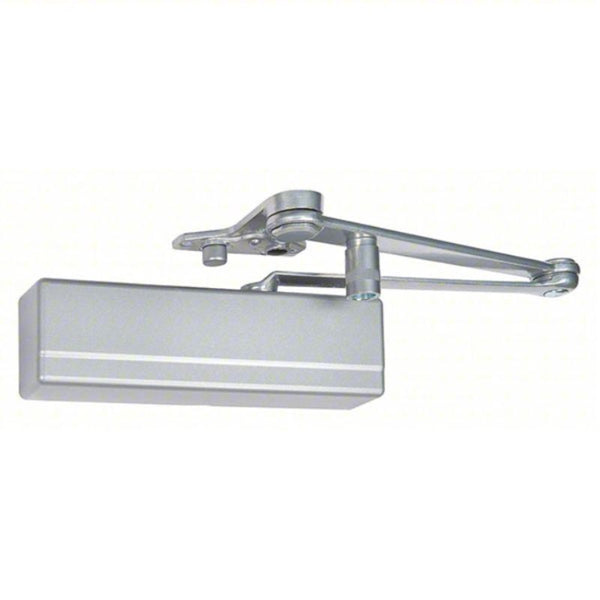
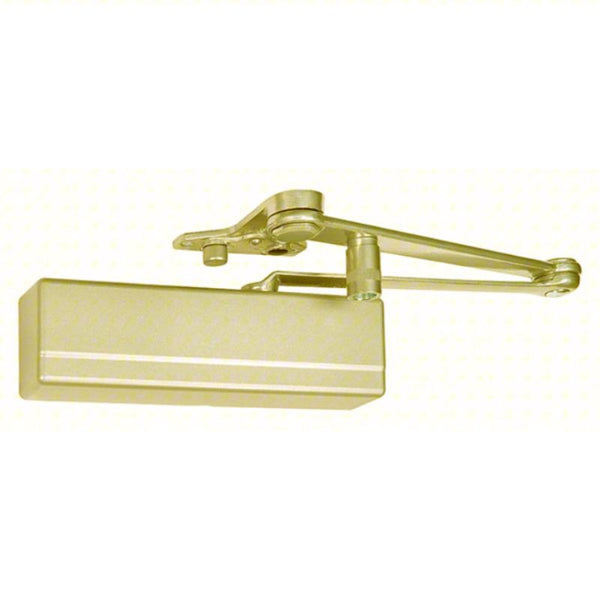


Surface-mounted closers handle the majority of commercial openings because they install on the door or frame face with no concealed preparation and can be serviced or replaced without touching the door itself. Shop surface closers from Sargent, LCN, Norton, Corbin Russwin, and Accentra in size 1-6 adjustable models, with regular, parallel, and top-jamb mounting, and hold-open, dead-stop, and delayed-action arm options. In stock and shipping the same day.
Why Surface Mounted Dominates
A concealed closer looks better. A floor closer carries more weight. So why does nearly every commercial door in the country use a surface-mounted closer?
Installation. A surface closer mounts to the door or frame face with screws and through-bolts. There's no pocket to machine into the door edge, no cavity in the header, no coring into the floor. A technician can install one on an existing door in under an hour.
Service. When a surface closer fails, it comes off, and a new one goes on. A concealed closer in a header means opening the header. A floor closer means the floor.
Adjustment. Every adjustment valve is reachable with the cover off. Sweep speed, latch speed, backcheck, and spring power are all set standing in front of the door.
That combination is why a surface closer is the default unless something specific rules it out, usually appearance or door weight.
The Three Mounting Positions
|
Mounting |
Closer mounts to |
Arm reaches to |
Door swings |
Notes |
|---|---|---|---|---|
|
Regular arm |
Pull side of the door |
The frame |
Away from the closer |
The traditional position; arm projects from the door |
|
Parallel arm |
Push side of the door |
The frame |
Toward the closer |
Arm runs along the door face, staying clear of traffic |
|
Top jamb |
Frame face above the door |
The door |
Toward the frame |
Used where the closer can't mount to the door |
Parallel arm is the most commonly specified on commercial corridors because the arm sits close to the door rather than projecting into the opening, which keeps it out of the way and reduces the chance of damage.
Most modern commercial closers are tri-packed, shipping with the brackets and fasteners for all three positions. One part number covers whichever the opening needs, which simplifies both ordering and stocking.
Popular SARGENT Surface Door Closer
|
Popular SARGENT Surface Door Closer |
Application |
|
SARGENT 351 Series |
Heavy-duty commercial openings |
|
SARGENT 1431 Series |
High-traffic commercial doors |
|
SARGENT 281 Series |
Commercial door closer applications |
Arm Types and What They Add
|
Arm |
What it adds |
|---|---|
|
Regular / standard |
Controlled closing, nothing more |
|
Hold open |
Holds the door open at a set position until pushed closed |
|
Dead stop |
Stops the door at a set point, protecting the wall without a separate stop |
|
Hold open with dead stop |
Both functions in one arm |
|
Delayed action |
Holds the door open briefly before closing, for slower traffic |
|
Spring/cush |
Cushions the door at the stop point with spring action |
|
Fusible link |
Holds the door open and releases at a set temperature |
Hold-open arms aren't permitted on fire-rated openings, because a rated door must close and latch. Where a rated door needs to stay open during the day, the route is an electromagnetic holder or an electromechanical closer that releases on alarm.
Dead stop arms are worth specifying where the door would otherwise hit a wall, radiator or adjacent hardware, since they can eliminate a separate wall or floor stop.
Spring Power and Sizing
Most commercial surface closers are size 1 through 6 adjustable, meaning one closer covers a range of door widths and the installer sets the power during installation.
|
Size |
Approximate door width |
|---|---|
|
1 |
Up to 28" |
|
2 |
30" |
|
3 |
34" |
|
4 |
36" |
|
5 |
42" |
|
6 |
48" |
Width is only the starting point. A heavy door, an exterior opening facing wind, a stairwell with stack pressure, or a door with substantial weatherstripping all need more power than the width alone suggests. At the same time, accessibility requirements limit opening force on some openings, so the setting has to satisfy both. Confirm against the manufacturer's guidance and the requirements for your opening.
Available Finishes
|
Code |
Finish |
Where it fits |
|---|---|---|
|
689 |
Aluminum painted |
The most widely stocked finish, matching aluminum framing |
|
690 |
Dark bronze painted |
Bronze storefront framing and darker schedules |
|
691 |
Dull bronze |
Flatter bronze option on select lines |
|
693 |
Black painted |
Dark hardware schedules |
|
695 |
Dark bronze |
A second dark bronze across some lines |
|
696 |
Satin brass painted |
Brass hardware schedules |
|
BSP |
Black suede powder coat |
Textured black for contemporary interiors |
|
WSP |
White suede powder coat |
White painted frames and light interiors |
-
689 aluminum is the default and carries the deepest stock across every brand in this collection.
-
Painted finishes can be touched up if the cover is scratched during installation.
-
Match the closer to the hinges, lockset, and exit hardware, since the closer body is one of the largest visible pieces on an opening.
Benefits of Surface Mounted Closers
-
Fast installation on the door or frame face with no concealed preparation.
-
Easy service, with every adjustment reachable from in front of the door.
-
Straightforward replacement when a closer fails or leaks.
-
Tri-packed mounting covering regular, parallel, and top jambs from one part number.
-
Size 1-6 adjustable so one model fits a range of door sizes.
-
Arm options for hold open, dead stop, delayed action, and cushioned stops.
-
Retrofit-friendly, since existing doors usually accept a surface closer.
-
Ready to ship. In-stock closers ship the same day.
Applications
-
Office and corridor doors across commercial buildings.
-
Classrooms and school corridors where closers take constant cycling.
-
Fire-rated openings requiring self-closing operation.
-
Exterior entrances needing higher spring power against wind.
-
Healthcare corridors using delayed action for slower traffic.
-
Doors near walls using dead stop arms.
-
Retrofits and closer replacements on existing doors.
-
Restrooms and service rooms where doors shouldn't be left open.